
TL;DR
Low MOQ shoe manufacturing typically means orders under 500 pairs, though the number varies wildly by category and factory. Expect to pay 20-40% more per pair on small batches, but your total investment stays low. This guide compares eight manufacturers ranging from zero-MOQ luxury production to 800-pair runs at $2-6 per pair, with real pricing, lead times, and sample policies so you can pick the right partner for your brand’s stage and budget.
Looking for women’s fashion sandals and flats? Request a quote from LR Shoes Custom to get up to 10 free trial samples before committing to bulk.
Quick Comparison Table
| Manufacturer | MOQ | Specialty | Lead Time | Sample Policy | Price Range | Best For |
|---|---|---|---|---|---|---|
| LR Shoes Custom | 600-800 pairs (trial orders negotiable) | Women’s sandals, flats, wedges, heels | 35-50 days (fixed) | Up to 10 free single samples; $100-$300 for exclusives, deductible | $2-$6 (fashion sandals) | Export-ready women’s fashion footwear |
| KINGDI Shoes | 50 pairs/style/color | Premium leather women’s shoes | 4-6 weeks | Quote-based, 1-2 week development | Quote-based (premium) | Ultra-low MOQ leather shoes |
| HYD Shoes | 20-30 pairs (stock); 120+ (custom) | All categories (men, women, kids) | 20-30 days (custom) | Free for returning customers | $2.50-$7+ | Mixed-category small orders |
| PandaShoes | 100 pairs/style/color | Women’s sneakers and casual | Industry standard | Quote-based | Quote-based | Custom sneaker brands |
| XINZIRAIN/HERRAINS | 50 pairs | Fashion shoes + bags | Industry standard | Quote-based | Quote-based | Shoes + accessories one-stop |
| XDS/ChinaShoeFactory | 500 pairs (select styles) | Multi-category private label | Industry standard | Quote-based | Quote-based | Brands ready for 500+ runs |
| Italian Shoe Factory | 0 (Dubai); 500 (Italy) | Luxury/bespoke | 6+ weeks prototype | $1,650-$2,500 per prototype | Premium | Luxury bespoke startups |
| COMUNITYmade | Small batch (unspecified) | Handcrafted US-made | Weeks (domestic) | Quote-based | Premium (US labor) | “Made in USA” positioning |
What Counts as “Low MOQ” in Shoes?
There is no universal standard. In very general terms, fewer than 500 units is considered a low MOQ, while over 5,000 units is high. But the real number depends on three things: shoe category, materials, and whether you need a custom sole mold.
Sneakers and canvas shoes often accept 50-100 pair minimums because the construction is simpler and materials are widely stocked. Leather dress shoes typically start at 200+ pairs. Fashion sandals made from PU or fabric sit somewhere in between, with practical low MOQs landing around 300-600 pairs per style. Footwear minimums are high by fashion standards, typically 400 to 1,000 pairs per style and color, and often higher when a custom sole mold is involved because the mold cost must be amortized.
The Cost Tradeoff Nobody Talks About
Unit costs on small batches typically increase 20-40% compared to standard order quantities. Setup costs, labor time, material waste, and management overhead get spread across fewer pairs. But here’s the part most articles skip: the total investment is lower.
Let’s run the math. Ordering 600 pairs of fashion sandals at $3.50 per pair costs $2,100 total. Ordering 50 pairs from an ultra-low MOQ factory at $15 per pair costs $750 total. The second option requires less cash upfront, but the first gives you six times the inventory at less than three times the cost. For brands planning to actually sell through inventory (not just test a concept), the higher-MOQ factory often makes more economic sense.
How to Lower Your Effective MOQ
One tactic that practitioners on sourcing forums consistently recommend: use stock soles and existing lasts. By selecting a sole that the factory already produces and a last (foot form) already in their library, you avoid mold costs entirely. This lowers your minimum, shortens lead time, and reduces per-pair pricing. The tradeoff is that your sole and fit won’t be unique, as other brands may use the same components. For a first production run, that’s usually an acceptable compromise.
Other ways to push MOQs down: reduce color variations (a single-color run is cheaper to set up than three), simplify hardware and embellishments, and choose materials the factory already stocks in volume.
8 Best Low MOQ Shoe Manufacturers
1. LR Shoes Custom
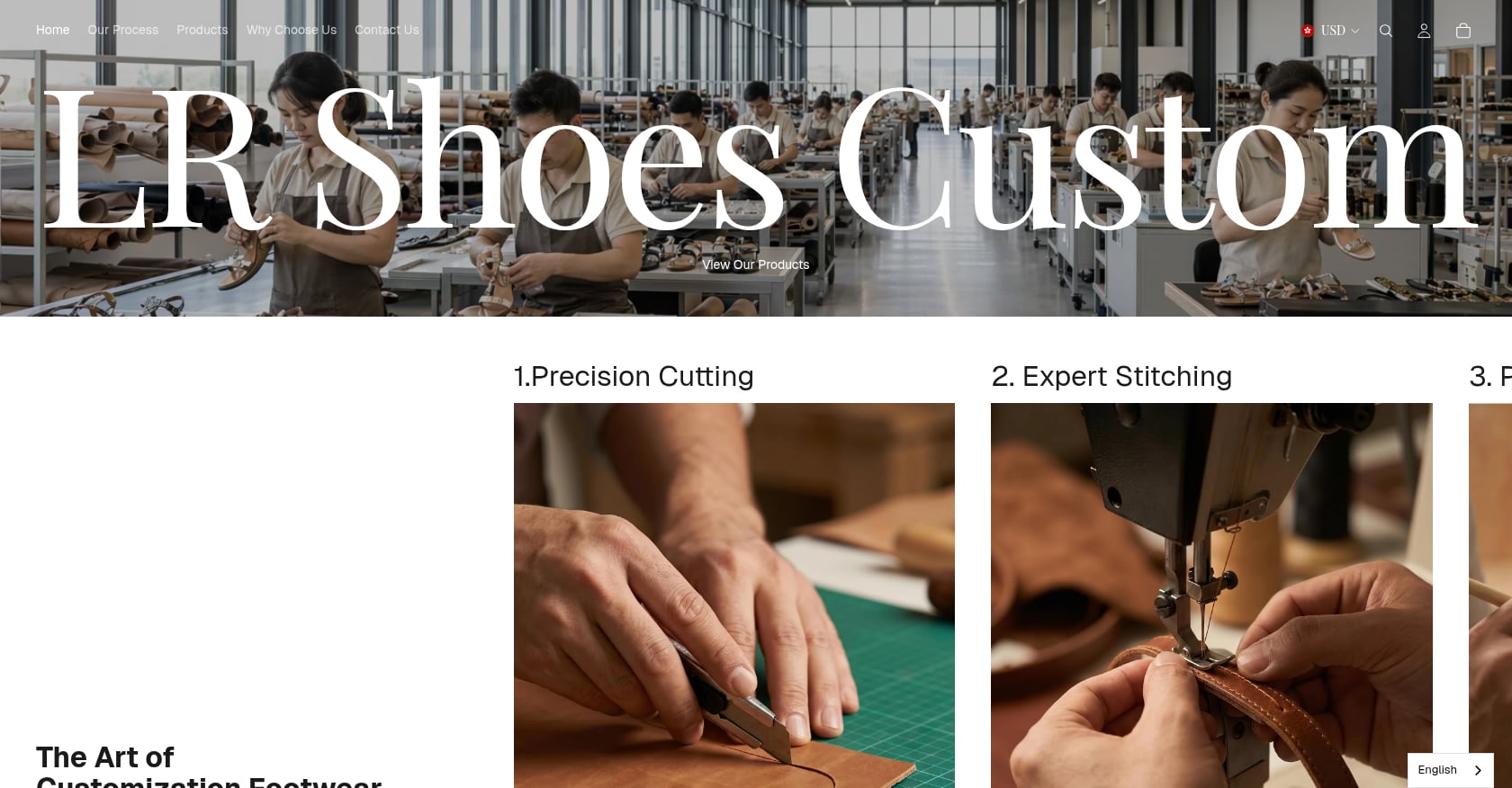
Best for: Emerging private-label brands focused on women’s fashion sandals and flats who need export-ready compliance and predictable lead times.
LR Shoes Custom is a Shantou, Guangdong-based OEM/ODM supplier with 17 years of export experience, specializing exclusively in women’s sandals, flats, wedges, and heels. The category focus is narrow by design. Factories that specialize in specific footwear types often optimize small orders better due to standardized processes, and LR’s women’s fashion niche means deeper last libraries, better material sourcing for trending styles, and faster turnaround.
MOQ: 600 pairs per style for single-color runs, 800 pairs for 1-3 colors. Trial orders can be negotiated lower at the factory’s discretion.
Pricing: Core PU/fabric fashion sandals run $2-$6 per pair, with the overall product range spanning $1.50-$15 per pair. LCL (less-than-container-load) orders are accepted but carry a higher unit price. Full-container orders receive preferential pricing, which is a real procurement variable worth asking about early.
Lead time: Fixed 35-50 days, even during peak season. This is notable. Most factories quote ranges and slip during high-demand periods. A fixed timeline is a concrete planning advantage for brands managing seasonal launches.
Sample policy: Up to 10 single-foot free trial samples (freight collect, 7-day dispatch). Exclusive or complex custom samples cost $100-$300, fully deductible against bulk orders. Compared to the industry standard of $30-$100 per sample pair with no refund, this policy dramatically lowers evaluation risk. You can browse their women’s sandals collection or check recent style additions to identify samples worth requesting.
QC and compliance: Three-checkpoint tracking (raw material inspection, mid-production QC with photos and video, pre-loading inspection). BSCI-audited factory claim. US care label and EU material rules compliance, with full export document preparation. For a deeper breakdown of what compliance means for your target market, see this footwear compliance guide.
Key strengths:
- 20-30 new styles weekly, tracking US and EU trends
- Both OEM (buyer-spec) and ODM (factory-style adaptation) paths
- 20 cooperative factories with 80,000 pairs/day stated capacity
- WhatsApp/WeChat direct line with 24-hour anomaly response
- Categories include cork Birkenstock-style sandals, wedges and heels, flats and loafers, espadrilles, and Mary Janes
Tradeoffs:
- The 600-800 pair standard MOQ is higher than ultra-low competitors advertising 30-100 pairs
- Category focus is narrow: women’s sandals, flats, wedges, and heels only
- Catalog pricing shown at $5 is a sampling placeholder; buyers must request quotes for exact program pricing
The bottom line: If you’re sourcing women’s fashion footwear for Western markets and want structured QC, fixed timelines, and compliance documentation baked in, the per-pair economics at $2-$6 are hard to beat. The MOQ is higher than some alternatives, but the total first order ($2,100 for 600 pairs at $3.50) is still within reach for most startup budgets.
2. KINGDI Shoes
Best for: Designers seeking very low MOQ for premium leather women’s dress shoes.
KINGDI positions itself as an ethical low MOQ custom shoes manufacturer specializing in genuine leather and sustainable vegan leather shoes. They rank #1 for “low moq shoes” thanks to aggressive keyword targeting and a clear 50-pair minimum prominently displayed on their homepage.
MOQ: 50 pairs per style per color. US, UK, and Euro sizes accepted.
Lead time: 1-2 weeks for samples once details are confirmed. Production takes 4-6 weeks.
Pricing: Quote-based and design/material dependent. Genuine leather construction at 50-pair minimums will push per-pair costs significantly higher than PU or fabric alternatives.
Key strengths:
- Full collection: high heels, sandals, kitten heels, loafers, ballerina flats, sneakers, boots
- Located in Chengdu, a leather shoe production hub
- Genuinely low barrier to entry for testing a design
Tradeoffs:
- Higher per-pair cost due to genuine leather and very low minimums
- No published compliance certifications (BSCI, REACH) found on their site
- Quote-based pricing makes it harder to budget before initial contact
3. HYD Shoes
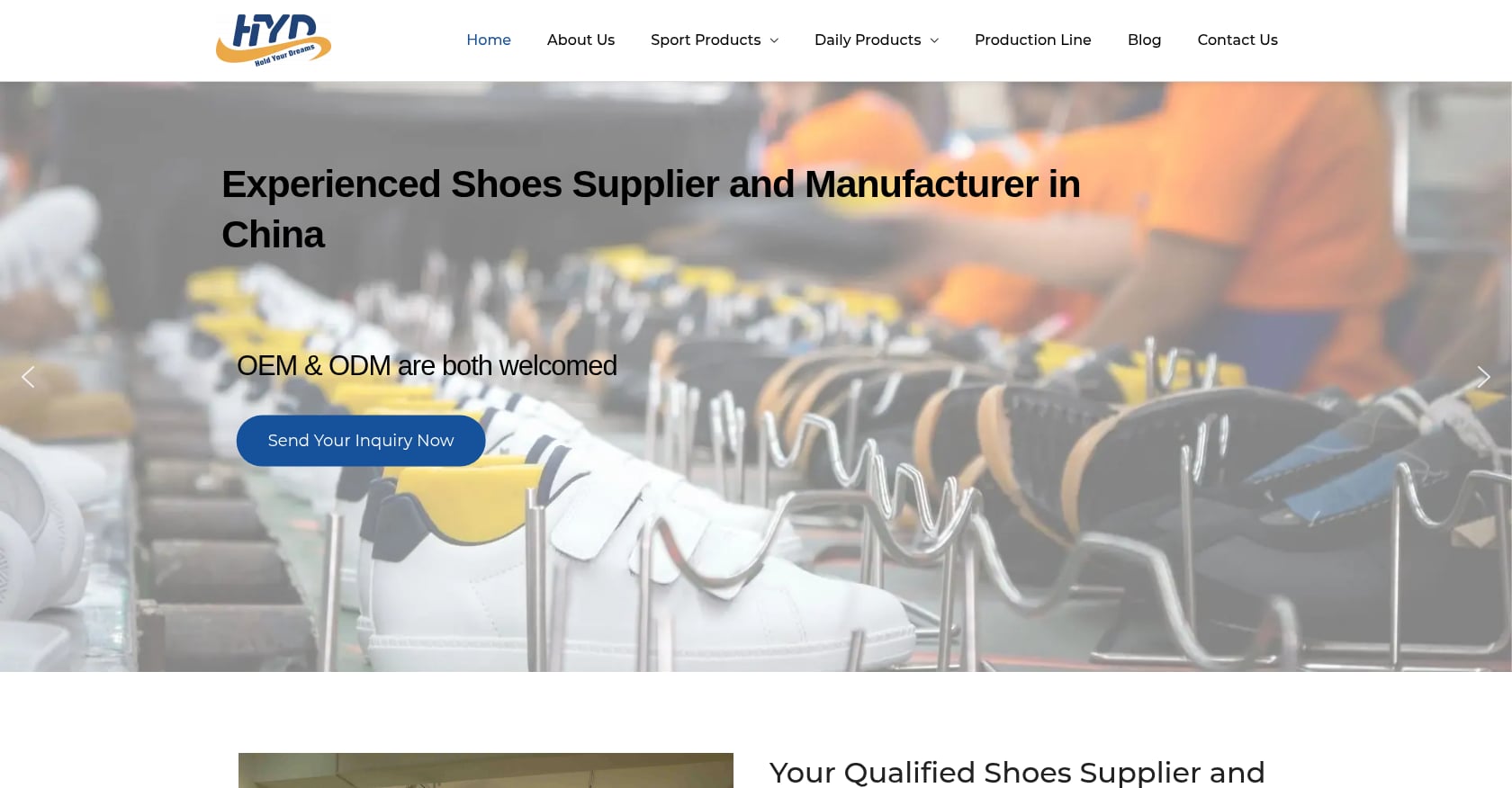
Best for: Buyers who need mixed-category orders (men’s, women’s, kids) with ultra-low minimums on stock styles.
HYD Shoes, operating since 2009 from Guangzhou, is a generalist factory covering everything from sneakers to safety shoes. Their MOQ structure splits between stock and custom, which makes them flexible for buyers who want to test multiple categories simultaneously.
MOQ: One carton (20-30 pairs) for available stock styles. 120 pairs minimum for custom men’s dress shoes. Custom women’s styles will vary.
Lead time: 3-7 days for samples if material is available. 20-30 days for customized production.
Pricing: Fashion sneakers start around $2.50-$3.80 per pair for stock styles. Over 200 customers across 30 countries.
Key strengths:
- 1,000+ new shoe designs monthly
- Mixed orders accepted, so you can combine categories in one shipment
- Competitive pricing on stock items
Tradeoffs:
- Generalist approach means less depth in any single category
- Custom design MOQs are considerably higher than stock MOQs
- Less specialized QC infrastructure compared to category-focused factories
Practitioners on Reddit’s r/smallbusiness have noted that getting responses from factories when order quantities are small is itself a challenge. HYD’s stock-style model partially solves this because the production setup already exists, and the factory isn’t being asked to tool up for a tiny custom run.
4. PandaShoes
Best for: Women’s sneaker and casual shoe brands wanting custom development from 100 pairs.
PandaShoes brings nearly 20 years of footwear manufacturing experience with a mature production system specifically optimized for custom sneaker projects.
MOQ: 100 pairs per style in the same color.
Lead time: Industry standard (roughly 30-45 days after sample approval).
Pricing: Quote-based, dependent on materials and customization.
Key strengths:
- Stable material supply chain for sneaker components
- 100-pair minimum is genuinely accessible for first-time sneaker brands
- Production system designed around sneaker construction
Tradeoffs:
- Sneaker-heavy focus makes them less suitable for fashion sandals, heels, or dress shoes
- Limited publicly available pricing or compliance documentation
- Not ideal if you need multiple footwear categories from one supplier
5. XINZIRAIN/HERRAINS
Best for: 50-pair startups wanting footwear and accessories (bags) from a single supplier.
XINZIRAIN, with its sub-brand HERRAINS, positions itself as a one-stop footwear and bag manufacturing solution. They’ve been operating for over 20 years and offer technical consultation alongside production.
MOQ: 50 pairs per design.
Lead time: Not specifically stated; expect the general industry range of 30-45 days.
Pricing: Quote-based. They emphasize material innovation and streamlined production, but published price lists aren’t available.
Key strengths:
- Combined footwear and bag manufacturing simplifies sourcing for accessory-inclusive brands
- 50-pair minimum is attractive for true startups
- Strong content marketing presence, so information is easy to find
Tradeoffs:
- Heavy marketing presence but less specific pricing and compliance data available publicly
- Breadth of offering (shoes plus bags) may dilute manufacturing focus compared to shoe-only specialists
- Vagueness about material compliance is a warning sign worth investigating before committing
6. XDS/ChinaShoeFactory.com
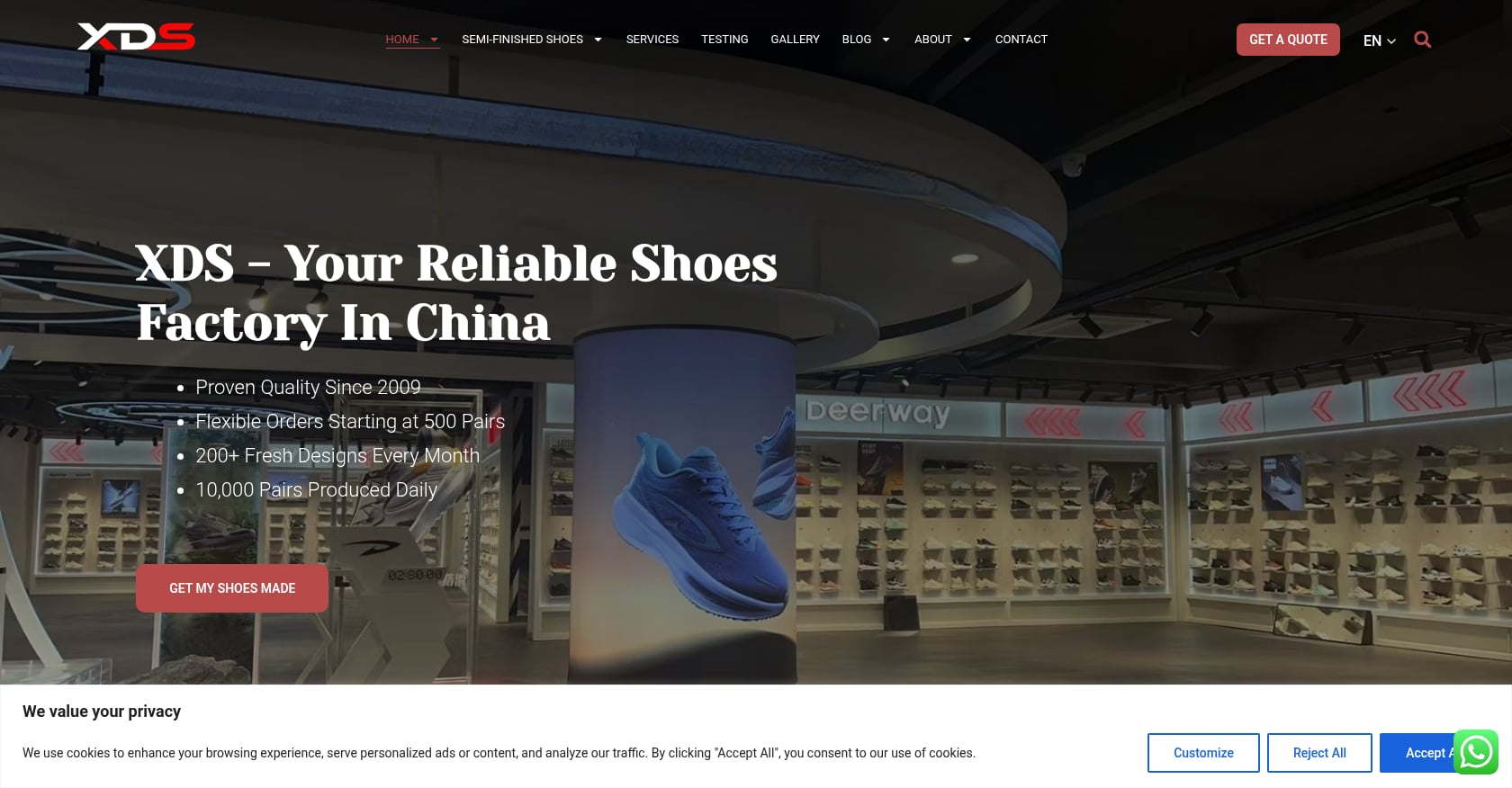
Best for: Brands slightly past the startup phase who can commit to 500-pair runs and want a reliable mid-range partner.
XDS positions itself as committed to supporting new and growing brands, with a low MOQ of 500 pairs for certain styles and dedicated small production lines.
MOQ: 500 pairs for select styles.
Lead time: Industry standard.
Pricing: Quote-based, multi-category private label.
Key strengths:
- Positioned specifically for growing brands that need scaling support
- Small production lines dedicated to lower-volume orders
- Multi-category coverage
Tradeoffs:
- 500 pairs is middle-of-the-road, not truly “low” for micro-brands testing their first design
- Limited public information on QC processes or compliance certifications
- Less suitable for brands that need to start under 200 pairs
7. Italian Shoe Factory
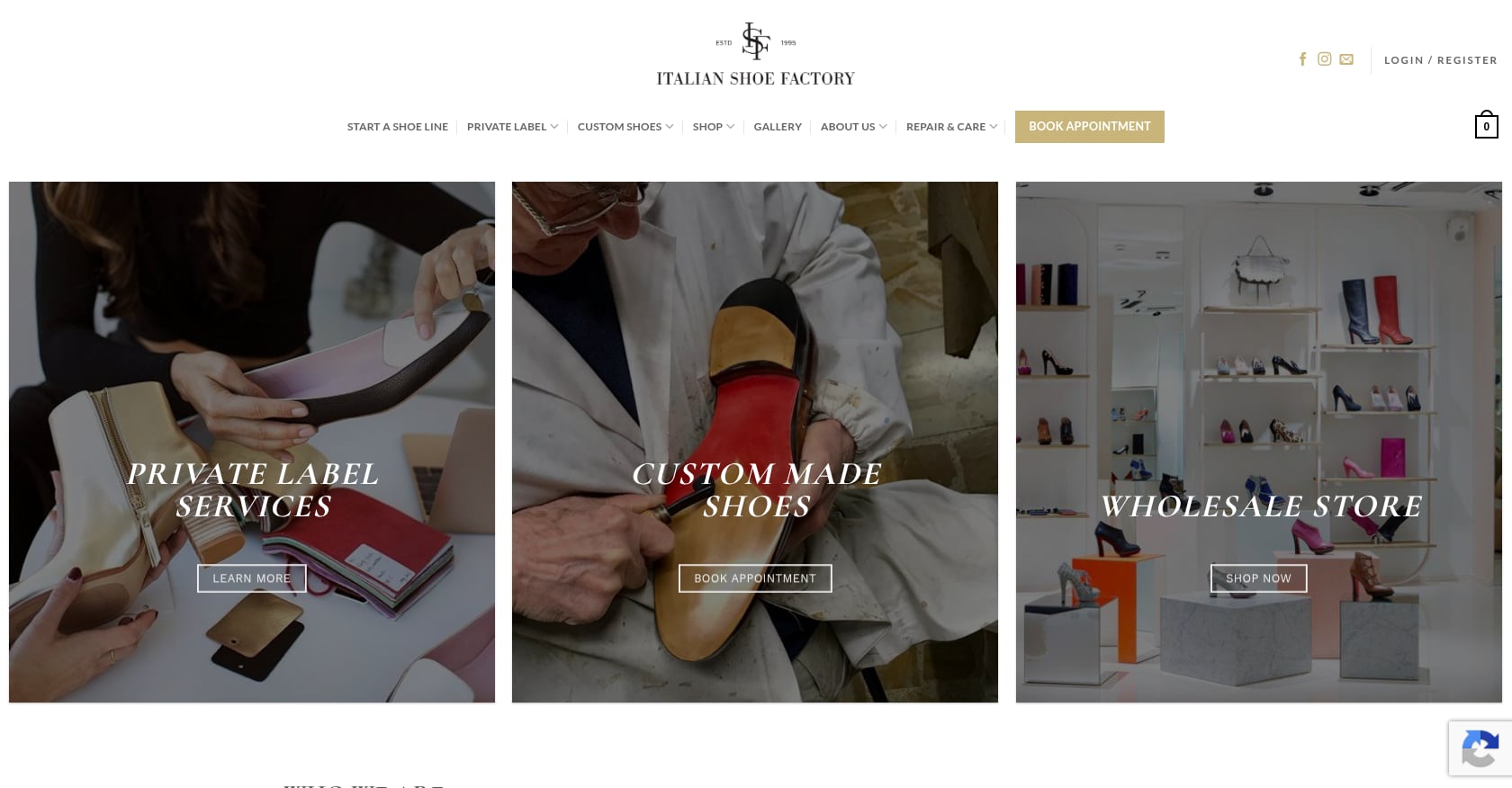
Best for: Luxury and bespoke startup brands wanting zero-MOQ production with Italian materials.
This is the outlier on the list. Italian Shoe Factory’s no minimum order quantity manufacturing breaks industry barriers entirely, producing as few as one pair depending on client requirements.
MOQ: Zero for small-batch production (final assembly in their Dubai factory). 500 pairs if you require assembly in their associate factories in Italy.
Lead time: 6+ weeks for prototyping alone.
Pricing: Prototype sampling costs $1,650-$2,500 per design. Per-pair production prices are quote-based but firmly positioned at a premium. Over 25 years of manufacturing for prominent designers and boutiques worldwide.
Key strengths:
- Genuinely zero MOQ for the Dubai assembly option
- Access to Italian materials and construction techniques
- Bespoke capability that no Chinese factory can match at this scale
Tradeoffs:
- Sampling costs alone ($1,650-$2,500) exceed the total cost of a 600-pair low MOQ order from budget-friendly alternatives
- Not suited for brands targeting sub-$10 retail price points
- The Dubai assembly path and the Italy assembly path are very different products at very different price points
8. COMUNITYmade
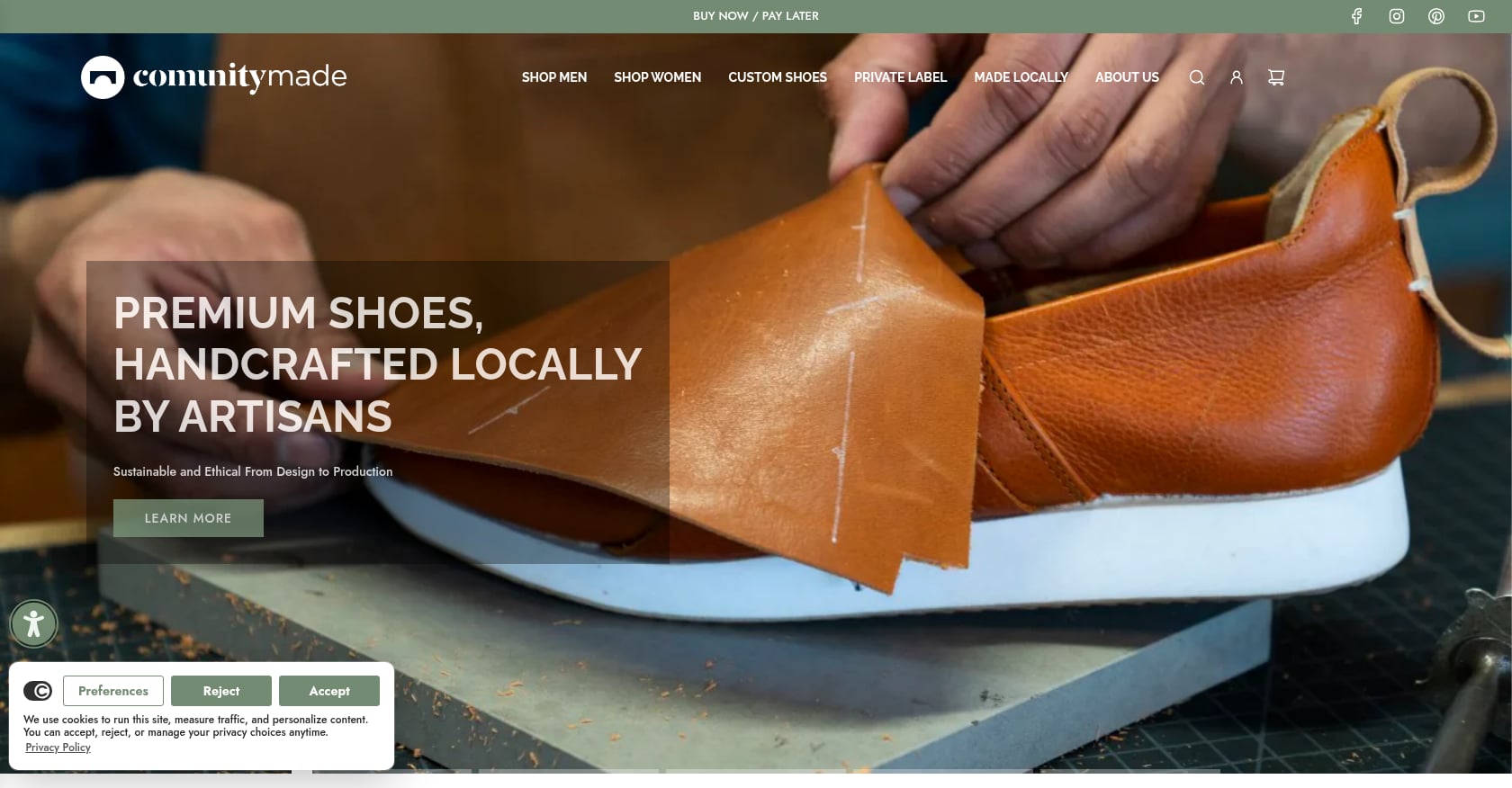
Best for: US-based brands who value “Made in USA” storytelling and domestic speed.
COMUNITYmade operates from a downtown LA facility, offering small-batch production with no customs hold-ups. Finished shoes go from factory to doorstep without international shipping complexity.
MOQ: Not published, but positioned for small batches.
Lead time: Weeks rather than months, thanks to domestic production.
Pricing: Premium, reflecting US labor costs. Expect multiples of Chinese factory pricing.
Key strengths:
- Eliminates customs, international freight, and import compliance headaches
- “Made in USA” label carries marketing value for certain consumer segments
- Faster iteration cycles due to proximity and shared time zones
Tradeoffs:
- Significantly higher per-pair cost than any China-based factory on this list
- Limited style range compared to Chinese OEM networks with thousands of molds
- Not practical for brands competing on price in the mass market
How to Evaluate a Low-MOQ Shoe Manufacturer: Buyer’s Checklist
Before you compare MOQ numbers, understand that sampling is the real gate. You need a sample you trust before worrying about whether your first order is 50 pairs or 600. Here’s what to verify:
1. How is MOQ calculated?
Per style? Per color? Per size run? A factory advertising “50 pairs per style” might mean 50 pairs in one color and one size range. Ask explicitly.
2. What’s the sample policy?
Who pays for samples? How many can you get? Are fees deductible against bulk orders? Free samples are rare among genuine low MOQ shoe manufacturers. The industry standard is $30-$100 per pair. Any factory offering free or deductible samples is signaling confidence in conversion and a long-term relationship orientation.
3. Is compliance documentation ready?
Ensure your supplier understands destination-market regulations: REACH for EU-bound footwear (chemical safety), CPSIA for the US (child safety if selling kids’ shoes), and proper care labeling. A supplier serious about Western markets will provide the documentation without hesitation. Vagueness here is a red flag.
4. What does QC actually look like?
Ask for specifics. How many inspection checkpoints? Do you get photos or video during production? What happens when a defect is found? Three-stage QC (raw materials, mid-production, pre-loading) is the gold standard for small-batch orders where every pair counts.
5. Test communication before committing.
Send a WhatsApp message or email with a specific technical question. If the response takes three days or comes back vague, imagine what happens when there’s a production problem. Speed and clarity in pre-sale communication reliably predict post-order support.
6. Understand LCL vs. FCL economics.
If your order doesn’t fill a full container (and most low MOQ orders won’t), you’ll ship LCL. Unit prices are higher, and you share container space with other shippers. Factor this into your landed cost calculation. Ask the factory whether they have preferred freight forwarders for LCL shipments.
7. Look for the relationship signal.
The best low MOQ manufacturers view small batches as the beginning of a long-term relationship, not a one-off nuisance. Trial-friendly policies, deductible sample fees, and structured onboarding processes all indicate a factory that wants to grow with you.
Get a quote from LR Shoes Custom to see how their sample-to-bulk process works in practice.
FAQ
What is the lowest possible MOQ for custom shoes?
It depends on the category. For stock styles from a generalist factory, you can order as few as 20-30 pairs. For custom designs, most factories require 50-120 pairs minimum. For truly bespoke luxury production, some manufacturers (like Italian Shoe Factory) accept orders of a single pair, but at prototype-level pricing ($1,650+ per design).
Does low MOQ mean low quality?
Not necessarily, but the risk increases. Small orders get less factory attention, and you have less negotiating power on materials. The way to mitigate this is to choose a factory with structured QC checkpoints and demand mid-production photos or video. Factories that specialize in a specific shoe category tend to maintain quality better on small runs because their processes are already optimized.
How much more expensive are low-MOQ orders?
Unit costs typically increase 20-40% compared to standard order quantities. Setup costs, labor, material waste, and management overhead are spread across fewer pairs. However, the total cash outlay is lower. A 600-pair order at $3.50 per pair ($2,100 total) often makes more sense than a 50-pair order at $15 per pair ($750 total) if you’re confident in the product.
What’s the difference between OEM and ODM for small shoe brands?
OEM means you provide the design and specifications, and the factory produces to your exact spec. ODM means you select and adapt existing factory designs, adding your branding and minor modifications. ODM is faster and cheaper for first-time brands because the factory already has patterns, lasts, and materials ready. OEM gives you more originality but requires more development time and typically higher minimums.
Can I reduce my MOQ by using stock soles?
Yes. By selecting a sole that the factory already produces and a last already in their library, you avoid custom mold costs entirely. This lowers your minimum, shortens lead time, and reduces per-pair pricing. The tradeoff is that your sole design won’t be unique. For a first production run, most brands find this acceptable.
How long does shoe manufacturing take from sample to delivery?
Sampling typically takes 1-2 weeks. After sample approval, production runs 30-50 days depending on the factory and order complexity. Add 2-4 weeks for ocean freight (or 1 week for air). Total timeline from first sample request to product in hand: roughly 10-16 weeks. Factories with fixed lead time commitments, like LR Shoes Custom’s 35-50 day guarantee, make planning significantly easier.
Should I visit the factory before placing an order?
If the order value justifies the trip, yes. But for initial low MOQ orders, a factory visit isn’t always practical. Instead, request a video tour, ask for references from existing clients, check for third-party audit certifications (BSCI, ISO), and evaluate sample quality rigorously. The sample phase is your remote factory audit.
What shipping method should I use for small shoe orders?
Most low MOQ shoe orders ship LCL (less-than-container-load) by sea, which is cheaper than air but slower. Air freight makes sense for urgent or very small shipments (under 200 pairs) where speed matters more than cost. US-based manufacturers like COMUNITYmade eliminate international shipping entirely, though production costs are higher.
Ready to start sourcing women’s fashion footwear with structured QC and competitive pricing? Browse the full catalog or contact LR Shoes Custom directly to discuss your first order.
0 comments