
TL;DR
Finding the right custom shoe design maker depends on your brand stage, product category, and order volume. This guide compares eight manufacturers across MOQ, sampling, lead time, pricing, and export compliance. LR Shoes Custom leads for private-label women’s sandals and flats with fixed lead times and Western compliance documentation. KINGDI Shoes suits premium leather startups with 30-pair minimums. Print-on-demand platforms work for zero-inventory graphic shoes but offer no structural customization.
Why This List Matters Right Now
The global footwear market hit $476.8 billion in 2025 and is projected to reach $675.6 billion by 2033. Women’s footwear accounts for 48% of that total, and non-athletic styles (sandals, flats, wedges, heels) represent 66.1% of the market. That’s a massive, growing segment for private-label brands.
But choosing a custom shoe design maker is where most new brands stumble. The wrong factory means missed selling seasons, inconsistent quality, and customs headaches. The right one gives you reliable production, export-ready documentation, and the design support to keep your catalog fresh.
This guide covers two distinct paths to custom footwear: traditional OEM/ODM manufacturing (where a factory builds shoes to your specifications) and print-on-demand (where existing shoe blanks get surface-printed with your graphics). Each path suits different business models, and confusing the two is a costly mistake.
Browse sample styles to see what OEM/ODM production looks like in practice before reading further.
How We Evaluated These Custom Shoe Design Makers
Every manufacturer on this list was assessed across six dimensions:
- MOQ flexibility: What’s the minimum order, and are trial orders available at reduced quantities?
- Sampling policy: Cost per sample, turnaround time, and whether fees are deductible against bulk orders.
- Lead time reliability: Published production timelines, and whether they hold during peak season.
- QC process: Number of inspection checkpoints, availability of photo/video proof, and defect-handling protocols.
- Export compliance: BSCI auditing, REACH readiness for EU-bound goods, CPSIA awareness for US children’s footwear, and care label preparation.
- Category specialization: Factories that specialize deeply in one footwear category consistently outperform generalists on quality and trend relevance.
Quick Comparison Table
| Maker | Specialization | MOQ | Sample Policy | Lead Time | Best For |
|---|---|---|---|---|---|
| LR Shoes Custom | Women’s sandals, flats, wedges, heels | 600 pairs/style (trial orders flexible) | Up to 10 free singles, 7-day dispatch | 35–50 days (fixed) | Private-label brands needing volume + export compliance |
| KINGDI Shoes | Premium women’s heels, boots, leather | 30 pairs | 7–15 day sampling | 25–35 days | Luxury/premium startups |
| XINZIRAIN | Fashion heels, boots, sneakers | 100 pairs | 15-day samples | Not published | Design-driven brand development |
| Guangzhou Shoes Factory | Men/women/kids (generalist) | Flexible (not published) | Quick samples | Not published | Multi-category sourcing |
| Italian Shoe Factory | Bespoke luxury (all types) | 1 pair (no MOQ) | Full prototyping | ~4 weeks | Luxury/bespoke with no minimums |
| Doing Footwear | All types (generalist) | 1 pair | Available | Varies | Micro-brand design testing |
| HYD Shoes | Sneakers, boots | 10+ pairs | Requires order confirmation | 3–20 days (stated) | Sneaker brands |
| POD (Printful/JetPrint) | Graphic-print shoes | 1 pair | N/A | Per-order fulfillment | Zero-inventory e-commerce |
1. LR Shoes Custom
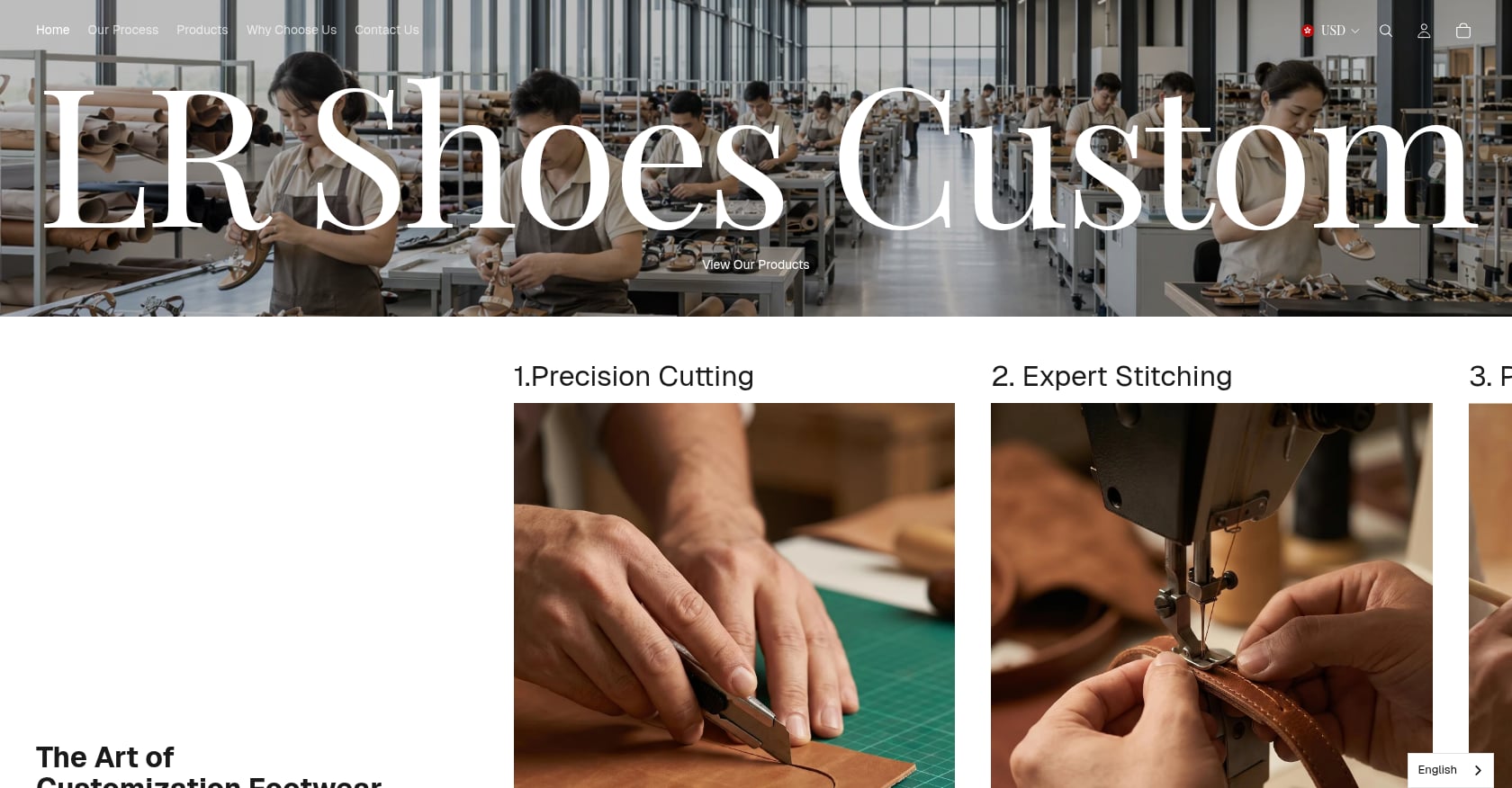
Best for: Private-label women’s sandals, flats, and wedges with full Western export compliance
LR Shoes Custom is a Shantou, Guangdong-based OEM/ODM manufacturer with 17 years of export experience, focused specifically on women’s and girls’ footwear. That specialization matters. As sourcing practitioners frequently point out, a factory offering sneakers, leather dress shoes, boots, and sandals all in-house is almost certainly overstating its capabilities, since each construction type requires different equipment and skills. LR stays in its lane: sandals, slippers, flats (Mary Janes, espadrilles), wedges, heels, and cork double-buckle styles.
Key specs:
- MOQ: 600 pairs per style (1–3 colors), 800 pairs for multi-color runs. Trial orders have relaxed minimums.
- Pricing: Core PU/fabric fashion sandals run $2–$6 per pair. Full product range spans $1.5–$15 per pair, with $1–$3 variation per style depending on material and construction choices.
- Lead time: Fixed 35–50 days, even during peak season. This is a hard commitment, not an estimate.
- Sampling: Up to 10 single free trial samples (freight collect, 7-day dispatch). Exclusive or complex custom samples cost $100–$300, fully deductible against bulk orders.
- Design capability: In-house development team producing 20–30 new styles per week. Supports three paths: bring your own sketch, send a reference sample, or adapt from the existing ODM catalog.
- Capacity: 20 cooperative factories with a combined daily capacity of approximately 80,000 pairs.
- QC/Compliance: BSCI-audited factory. Three QC checkpoints: raw material inspection, mid-production photos and video, and pre-loading inspection reports. US care label preparation and EU materials compliance documentation included.
Standout feature: The three-stage QC tracking system with photo and video proof at each checkpoint. Practitioners on sourcing forums consistently warn that production tracking is the single biggest gap in custom shoe manufacturing. Stories of “samples that looked nothing like the final product” and “delivery dates pushed back until they missed the entire sales season” are common. LR’s checkpoint system, combined with a 24-hour anomaly response commitment via WhatsApp or WeChat, directly addresses that pain point.
Proof of scale: Landmark orders include 150,000 pairs of advertising sandals for a Spain-based buyer (2010) and 80,000 pairs of pearl slides for the US market. Current top sellers include plum-blossom metal-buckle slides for the US and ring-buckle slides for Poland.
For brands focused on trending women’s sandals, the weekly style refresh means your catalog never goes stale.
Watch out for: The 600-pair standard MOQ is higher than some competitors advertising 30–90 pairs. For brands not yet ready for that volume, the trial order option or the free sampling program is the way to test the waters. The specialization in women’s fashion footwear also means this isn’t the right factory for sneakers, men’s shoes, or athletic footwear.
2. KINGDI Shoes
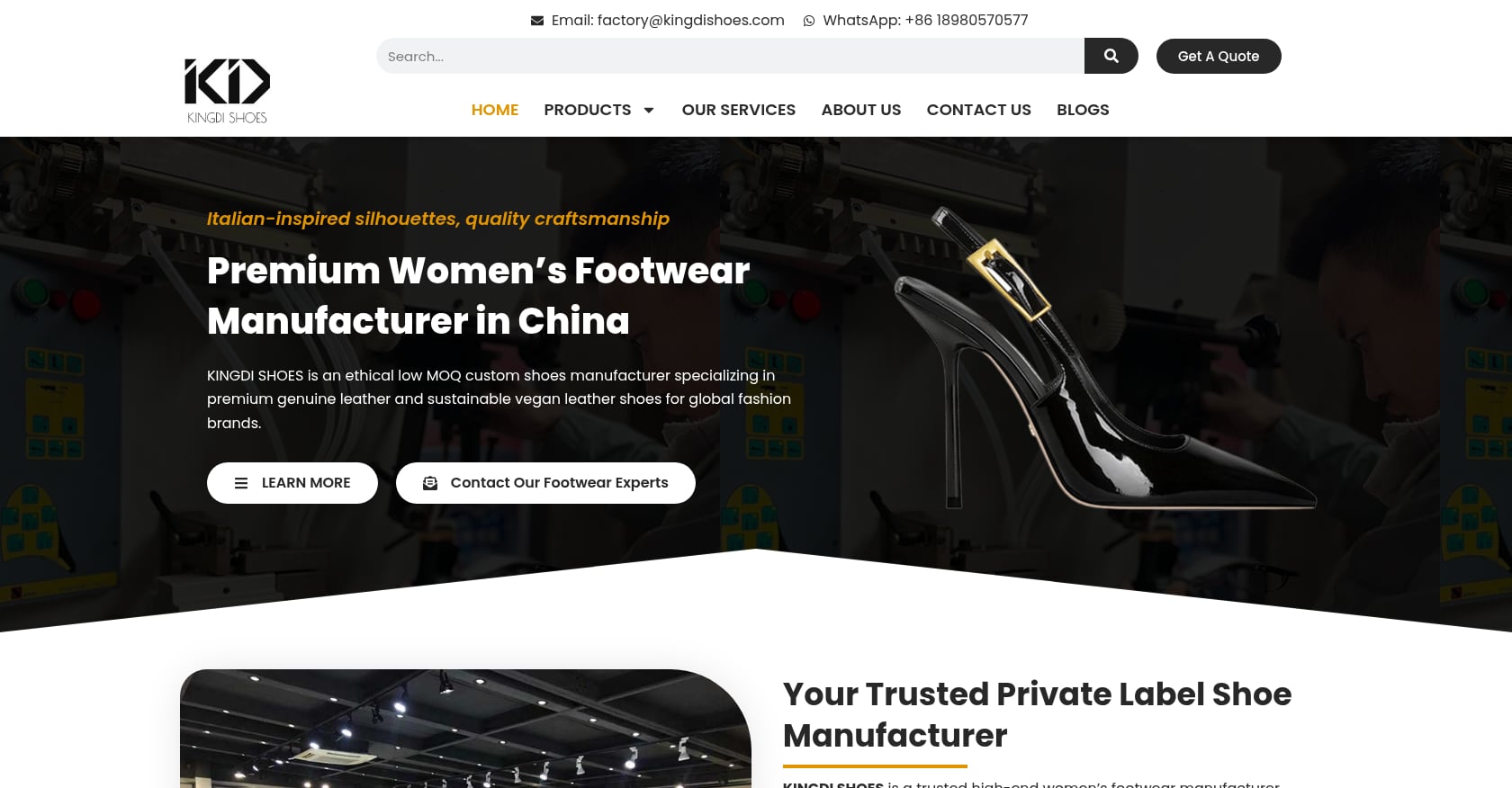
Best for: Premium and luxury women’s footwear brands wanting genuine leather with ultra-low MOQs
KINGDI Shoes operates out of Chengdu, Sichuan, a region that produces 100 million pairs of women’s shoes annually. The factory specializes in premium genuine leather and sustainable vegan leather shoes, covering high heels, boots, pumps, platforms, wedges, heeled mules, sandals, and bridal shoes. They also offer inclusive sizing (plus size, wide fit, petite).
Key specs:
- MOQ: 30 pairs per design
- Sampling: 7–15 day turnaround
- Lead time: 25–35 days for bulk production
- Materials: Genuine leather and vegan leather focus
Standout feature: The 30-pair MOQ is among the lowest in the industry for a factory claiming premium leather construction. This makes KINGDI particularly attractive for startups testing a luxury positioning without committing to hundreds of pairs.
Watch out for: Very low MOQs almost always mean higher per-unit costs, so budget-conscious brands working with PU or fabric constructions may find better pricing elsewhere. No publicly stated BSCI certification or export-compliance framing was found, so buyers targeting the EU or US should ask explicitly about REACH and CPSIA documentation. The leather focus, while a strength for premium brands, limits options for sellers who need affordable PU/fabric construction.
3. XINZIRAIN
Best for: Fashion brands that need design development support and brand-driven collections
XINZIRAIN (also known through their HERRAINS content platform) is a professional OEM/ODM manufacturer that positions itself differently from mass athletic shoe factories. Their focus is brand-driven footwear development, meaning they work with brands to develop original collections rather than simply fulfilling production orders.
Key specs:
- MOQ: Starting at 100 pairs per design
- Sampling: Approximately 15-day sample turnaround
- Lead time: Not publicly specified
- Specialization: Fashion heels, boots, sneakers
Standout feature: XINZIRAIN has built significant content marketing authority with multiple blog posts ranking for footwear sourcing keywords. That content, covering factory selection criteria and industry education, suggests genuine expertise in the brand development process. For designers who have concepts but need help turning them into production-ready specs, this is a meaningful differentiator.
Watch out for: The design-driven positioning likely means higher per-pair costs compared to pure production houses. Their product range leans toward heels, boots, and sneakers rather than sandals and flats. Published lead times are not available, which makes retail calendar planning harder.
4. Guangzhou Shoes Factory
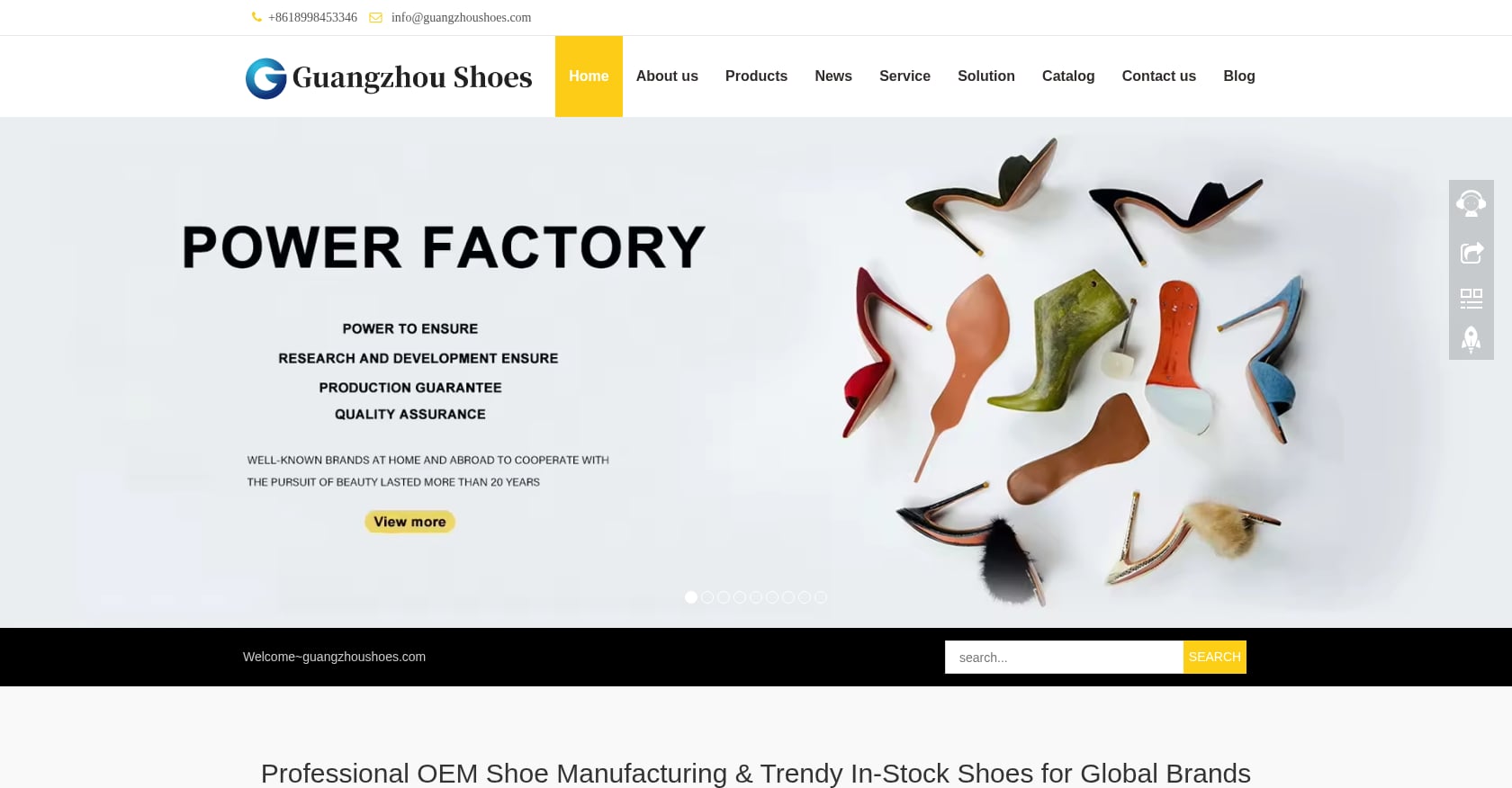
Best for: Brands needing multi-category sourcing from a single supplier in Guangzhou
Guangzhou produces roughly 60% of China’s fashion shoes, making it the country’s dominant footwear manufacturing hub. Guangzhou Shoes Factory positions itself as a generalist covering men’s, women’s, and children’s footwear with flexible minimum order quantities.
Key specs:
- MOQ: Described as “flexible” but no specific numbers published
- Sampling: “Quick sample development” claimed
- Lead time: Not published
- Coverage: Men’s, women’s, and kids’ footwear
Standout feature: The breadth of category coverage. If your brand spans men’s, women’s, and children’s lines and you want a single sourcing relationship, a generalist in Guangzhou has logistical advantages.
Watch out for: Generalist factories face a well-documented trade-off. Experienced sourcing professionals warn that sneakers, leather dress shoes, boots, and sandals all require different constructions, equipment, and skill sets that few factories genuinely span. A generalist claim often means some categories are subcontracted or produced with less expertise. The lack of published MOQ and lead time numbers also makes comparison difficult without direct engagement.
5. Italian Shoe Factory
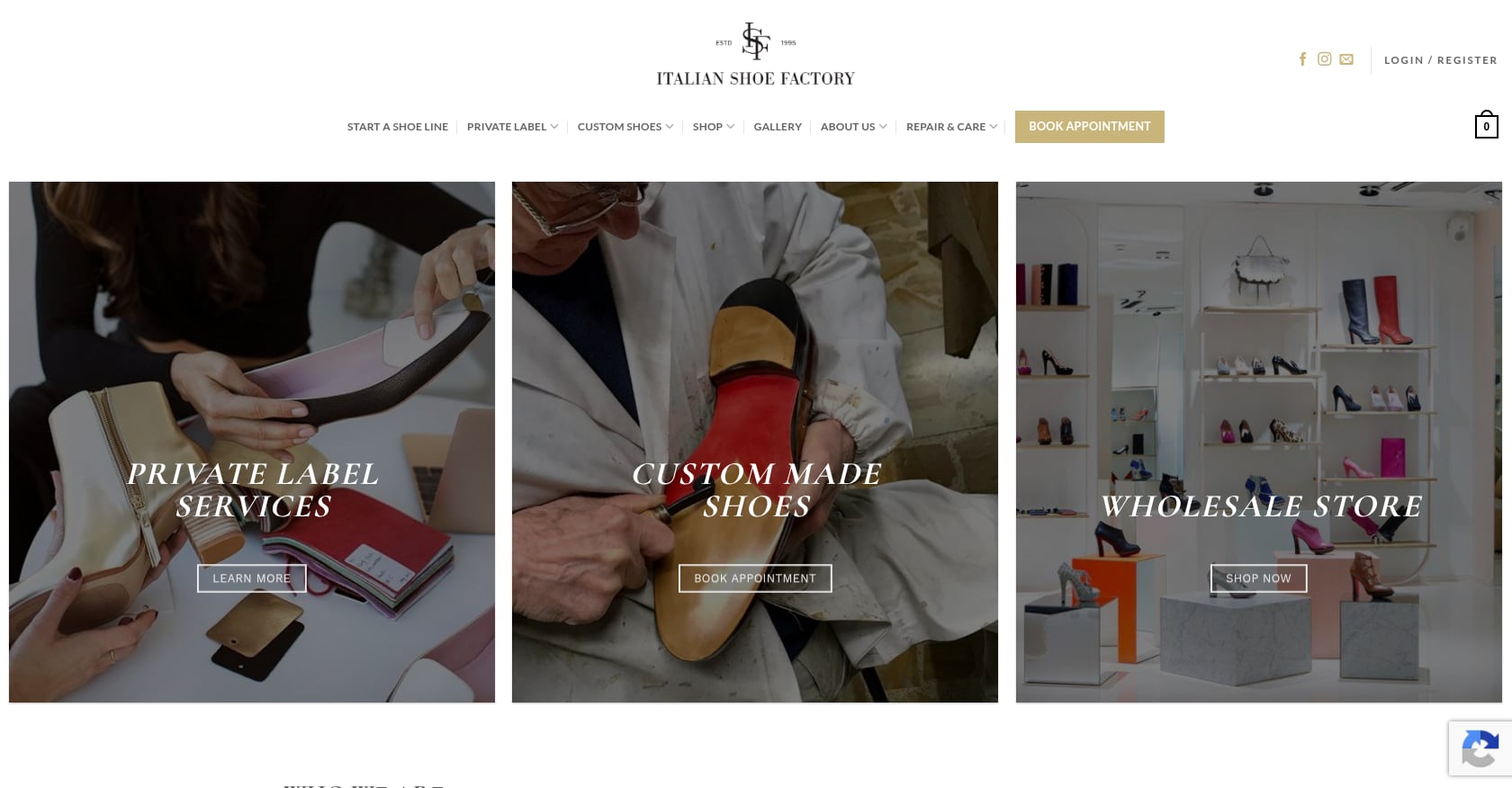
Best for: Luxury and bespoke brands wanting no-MOQ prototyping with Italian materials
Despite its name, Italian Shoe Factory is based in Dubai and has been operating since 1995 under owner Amin Virani. The company uses Italian materials and offers what few factories can: production runs starting from a single pair.
Key specs:
- MOQ: No minimum (even 1 pair)
- Lead time: Approximately 4 weeks
- Materials: Italian-sourced leather and components
- Positioning: Premium and bespoke
Standout feature: The no-MOQ policy is genuinely rare and valuable for brands in the earliest prototyping stage or designers who need small bespoke runs for high-end clientele.
Watch out for: Premium pricing is the obvious trade-off. This is not a volume production partner. You won’t get China supply-chain cost advantages, and scaling beyond small runs would require a different manufacturing relationship. Suited exclusively to luxury price points.
6. Doing Footwear
Best for: Individual designers and micro-brands testing a single design concept
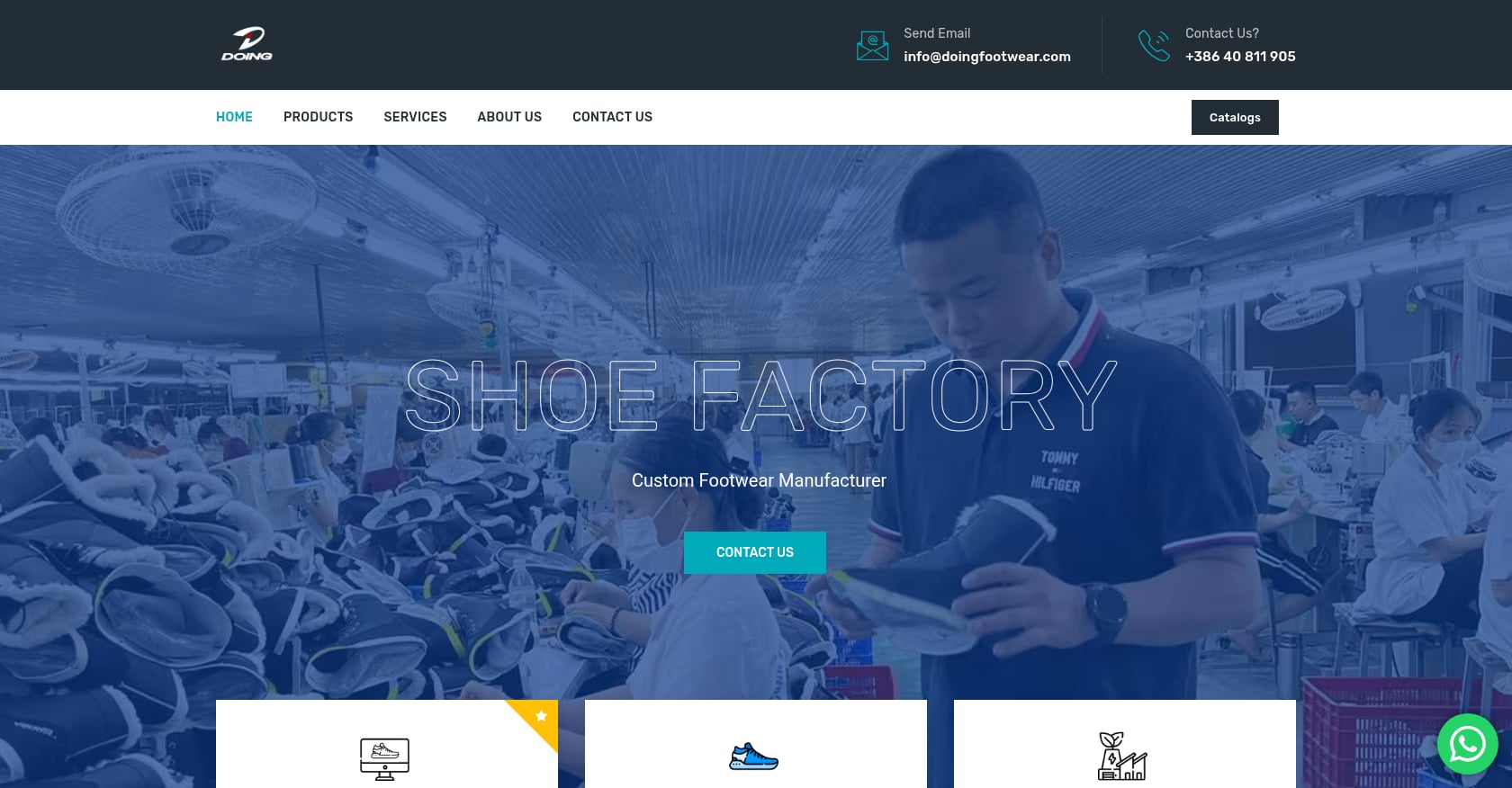
Doing Footwear, based in Quanzhou, Fujian Province, accepts orders as small as a single pair. Their pitch is agility and precision for personalized footwear, special events, or pre-launch testing.
Key specs:
- MOQ: 1 pair
- Coverage: Broad category range
- Lead time: Varies by order complexity
Standout feature: The single-pair capability makes this a useful option for designers who want to validate a concept physically before committing to a production relationship. If you need one pair for a photo shoot or trade show, the barrier to entry is minimal.
Watch out for: Single-pair and micro-batch production carries significantly higher per-unit costs. The broad category coverage raises the same specialization concerns as other generalist factories. This is a testing partner, not a scaling partner.
7. HYD Shoes
Best for: Custom sneaker and boot brands willing to commit before sampling
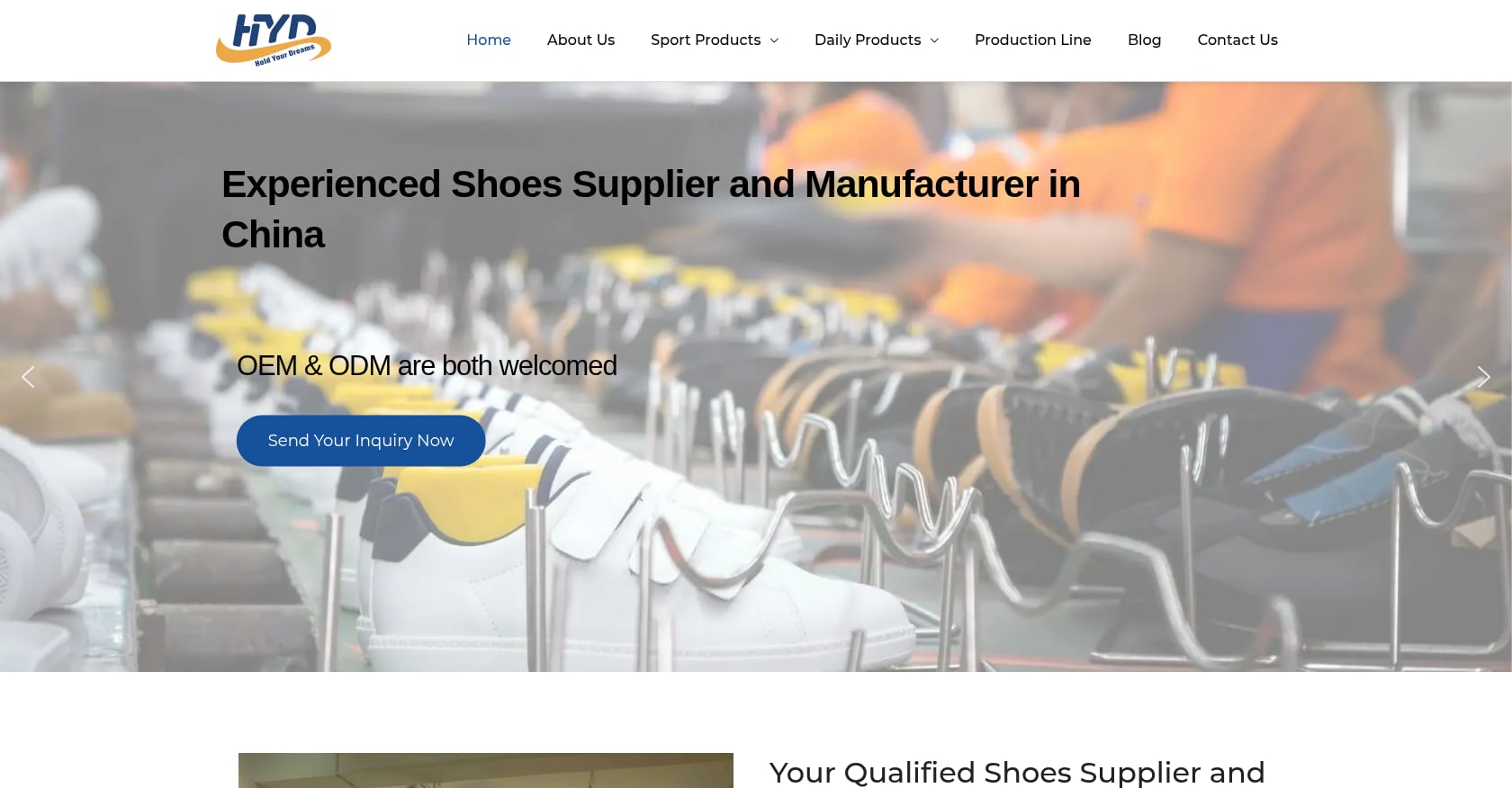
HYD Shoes has operated out of Guangzhou since 2008, serving hundreds of businesses with custom and wholesale shoes. Their primary focus is sneakers and boots.
Key specs:
- MOQ: 10+ pairs
- Lead time: 3–20 days (as stated on their site)
- Sampling policy: Samples only available after confirming an order of more than 12 pairs
Standout feature: Fast stated lead times (3–20 days) and low entry point for sneaker-focused brands.
Watch out for: The sample-only-with-order-confirmation policy is a significant red flag for risk-averse buyers. Sourcing practitioners on Reddit and forums consistently advise: never commit to a bulk order without independently evaluating samples first. If a factory requires order commitment before providing samples, you lose your most important quality checkpoint. Additionally, the sneaker and boot focus means limited depth in women’s fashion categories like sandals or flats.
8. Print-on-Demand Platforms (Printful, JetPrint, Swagify)
Best for: E-commerce sellers wanting graphic-print shoes with zero MOQ and no inventory
Print-on-demand (POD) represents a fundamentally different model from OEM/ODM manufacturing. Instead of designing a shoe from scratch, you select existing shoe blanks (typically sneakers or slip-ons) and apply surface-level graphic prints. Platforms like Printful, JetPrint, and Swagify handle production and fulfillment per order.
Key specs:
- MOQ: 1 pair (per-order production)
- Customization: Surface graphics only (no material, sole, or structural changes)
- Styles available: High-top sneakers, slip-ons, and limited niche designs
- Fulfillment: Integrated with Shopify, Etsy, and other e-commerce platforms
Standout feature: Zero inventory risk. You sell first, then the platform produces and ships. JetPrint specializes in high-top custom sneakers and niche designs. Printful offers competitive pricing with flexible product options.
Watch out for: POD shoes are not custom shoe manufacturing in the traditional sense. You cannot choose materials, modify soles, alter construction methods, or create original silhouettes. Per-unit costs are substantially higher than bulk OEM production. The style range is extremely limited, mostly sneakers and slip-ons. For brands building a genuine footwear line with original designs, POD is a stepping stone at best.
How to Choose the Right Custom Shoe Design Maker
Picking a factory is not just about finding the lowest MOQ or the cheapest price. Here’s a practical framework.
Match Specialization to Your Product
If you’re building a women’s sandal brand, don’t go to a sneaker factory. Regional specialization in China runs deep. Guangzhou handles 60% of fashion shoes. Fujian Province (Jinjiang, Quanzhou) excels in athletic and casual footwear. Zhejiang Province (Wenzhou, Rui’an) specializes in leather dress shoes. For wedges and heels, look for factories with dedicated women’s fashion lines and trend-refresh capabilities.
Never Skip Prototyping
Experienced practitioners are emphatic on this point: sample prototypes help brands test fit, color accuracy, comfort, and stitching before committing thousands of dollars to bulk production. One widely shared rule of thumb in sourcing communities is blunt: “If the sample shoes have obvious defects, the bulk production will only be worse.”
Brands building a Mary Jane flats line or launching espadrille wedge sandals should request multiple samples and test them thoroughly before approving production.
Verify QC Processes in Detail
Ask specifically what inspection checkpoints exist and whether you’ll receive photo or video evidence. Common quality control failures include uneven stitching, loose soles, crooked centerline seams, and faded prints. A properly structured QC system catches these at the mid-production stage, not after 5,000 pairs are packed and shipped.
Check Export Compliance Documentation
This is the filter most new brand owners skip, and it’s the one that causes the most expensive problems. If you’re selling into the EU, your manufacturer should understand REACH chemical safety requirements. US-bound goods need proper care labels. Children’s footwear falls under CPSIA. A BSCI-audited factory signals third-party verified labor and safety standards.
Understand MOQ Economics
Lower MOQs sound attractive, but they carry trade-offs. A factory offering 30-pair minimums will almost certainly charge more per pair than one requiring 600. That’s not a scam; it’s the economics of production line setup, material sourcing, and quality control spread across fewer units. Match your MOQ to your actual sales volume projections, not your hopes.
Red Flags to Watch For
Sourcing professionals on forums and YouTube walkthroughs repeatedly flag these warning signs:
- “3-day samples”: Factories promising impossibly fast sample turnaround may be passing off someone else’s shoes or cutting corners on sample quality.
- No sample-before-order policy: If a factory won’t let you evaluate samples before committing to a bulk order, walk away.
- Generalist claims with no evidence: A factory claiming to produce every shoe type equally well probably does several of them poorly.
- No QC documentation: If they can’t show you what their inspection process looks like, they probably don’t have one.
- Communication gaps: Poor supplier communication causes misunderstandings around materials, timelines, and design details. Lack of clear, regular updates often leads to color mismatches, shipping delays, or complete order failures.
Sample Policy Comparison
No other guide compares sample policies side by side. Here’s what that looks like:
| Maker | Sample Cost | Turnaround | Deductible? | Notes |
|---|---|---|---|---|
| LR Shoes Custom | Free (up to 10 standard); $100–$300 (exclusive) | 7 days | Yes, fully deductible against bulk | Freight collect on free samples |
| KINGDI Shoes | Not published | 7–15 days | Not stated | Request quote |
| XINZIRAIN | Not published | ~15 days | Not stated | Request quote |
| Italian Shoe Factory | Included in prototyping | ~4 weeks | N/A | Premium pricing |
| HYD Shoes | Requires order confirmation | Varies | N/A | Must commit to 12+ pairs first |
Industry-wide, most manufacturers charge $30–$100 per sample pair, with sample production taking 7–15 days. LR Shoes Custom’s free sampling policy (up to 10 singles) is a genuine outlier that reduces evaluation cost for buyers comparing multiple styles.
Ready to test styles risk-free? Request a custom sample to see construction quality firsthand.
OEM vs. ODM vs. Print-on-Demand: Know the Difference
These three terms describe fundamentally different manufacturing relationships, and confusing them leads to wasted time and money.
OEM (Original Equipment Manufacturing): You provide the complete design, including specifications for materials, colors, construction, and sizing. The factory produces exactly what you designed. Best for brands with established design teams and clear product specs.
ODM (Original Design Manufacturing): The factory designs the product (or you adapt from their existing catalog), and you apply your branding. Best for brands without in-house design capability or those wanting faster time-to-market. Many custom shoe design makers, including LR Shoes Custom, support both paths.
Print-on-Demand: A third-party platform prints your graphic designs onto pre-made shoe blanks and fulfills orders one at a time. No structural customization. Best for graphic-focused e-commerce sellers testing demand.
For brands exploring the ODM path, checking a factory’s latest new arrivals gives a clear picture of current design direction and catalog freshness.
Frequently Asked Questions
What is the typical MOQ for custom shoe manufacturing?
MOQs vary dramatically. Print-on-demand has no minimum. Small-batch specialists like KINGDI Shoes start at 30 pairs. Volume-oriented factories like LR Shoes Custom set standard MOQs at 600 pairs per style (with flexible trial orders for new buyers). Generally, lower MOQs mean higher per-unit costs, so your choice should align with realistic sales projections rather than minimizing risk at the expense of margin.
How much do custom shoe samples cost?
Industry standard is $30–$100 per sample pair, with production taking 7–15 days. Some factories offer free samples for standard catalog styles. LR Shoes Custom provides up to 10 free single trial samples (freight collect, 7-day dispatch), with exclusive or complex custom samples priced at $100–$300, fully deductible against bulk orders.
How long does custom shoe production take?
Most custom shoe design makers quote 25–50 days for bulk production after sample approval. LR Shoes Custom commits to a fixed 35–50 day window even during peak season. KINGDI Shoes states 25–35 days. The key distinction is whether the quoted lead time is a firm commitment or an estimate that stretches under load.
What’s the difference between OEM and ODM shoe manufacturing?
OEM means you supply the complete design and the factory produces it. ODM means the factory contributes design capability, either creating original designs for you or letting you adapt existing styles from their catalog. Many factories support both. ODM is faster and requires less in-house design expertise. OEM gives you more control and originality.
What certifications should a custom shoe factory have?
For EU-bound footwear, REACH compliance (chemical safety) is mandatory. US children’s shoes require CPSIA compliance. BSCI auditing verifies labor conditions and factory safety standards. ISO 14001 matters for eco-conscious brands. At minimum, any factory exporting to Western markets should demonstrate BSCI auditing, proper care label preparation, and awareness of destination-market material regulations.
Can I start a shoe brand with no design experience?
Yes, through the ODM path. Many custom shoe design makers maintain catalogs of existing styles that you can adapt with your branding, materials, and color choices. This lets you launch a private-label line without an in-house design team. As your brand grows and you develop clearer aesthetic direction, you can transition to OEM production with your own original designs.
What pricing should I expect for custom women’s sandals?
Pricing depends on materials, construction complexity, and order volume. PU and fabric fashion sandals from China-based manufacturers typically run $2–$6 per pair at volume (FOB). The full range across women’s footwear categories spans $1.5–$15 per pair, with $1–$3 variation per style based on material and construction upgrades. Premium leather or Italian-material factories charge significantly more.
How do I avoid quality problems in bulk production?
Three practices matter most: thorough sample evaluation before approving production, mid-production QC checkpoints with photo or video documentation, and pre-shipment inspection reports. Create a defect checklist covering stitching consistency, sole adhesion, color accuracy, sizing uniformity, and centerline seam alignment. If you can’t visit the factory, insist on visual proof at every stage.
Finding Your Match
The right custom shoe design maker depends entirely on where your brand is today and where it’s headed. Micro-brands testing a concept should start with low-MOQ or single-pair options. Scaling brands ready for volume production need factories with fixed lead times, structured QC, and export compliance documentation.
For private-label brands building women’s sandal, flat, or wedge lines for Western markets, the combination of specialization depth, compliance infrastructure, and transparent production tracking is what separates reliable partners from risky ones.
Get a production quote to start the conversation with specs that match your brand stage and target market.
0 comments