
TL;DR
Yes, you can get custom made shoes for your brand. The most practical path for footwear entrepreneurs, private-label retailers, and e-commerce sellers is partnering with an OEM or ODM factory. Expect FOB costs of $2 to $15 per pair, minimum order quantities starting around 300 to 1,000 pairs per style, and production lead times of 35 to 50 days. This guide covers factory sourcing, MOQ negotiation, sample policies, quality control processes, and export compliance requirements so you can move from concept to finished product with confidence.
Custom Made Shoes Are a Growing Business Opportunity
The question “can you get custom made shoes” used to conjure images of wealthy individuals visiting bespoke cobblers. That era is over. The custom shoe market was valued at $7.46 billion in 2026 and is projected to hit $16.70 billion by 2033, growing at a 12.2% CAGR according to Coherent Market Insights. And 73% of Gen Z consumers under 30 prefer unique sneaker designs that aren’t widely available, according to Market.us.
For brand owners and retailers, those numbers represent a clear opening. Consumer appetite for differentiated footwear is outpacing what mass-market brands can deliver. Private-label and custom-branded shoes fill that gap, especially in underserved categories like women’s sandals, flats, and wedges where trend cycles move fast and consumers want fresh options every season.
The real question isn’t whether you can get custom made shoes. It’s which manufacturing path gives you the best combination of cost, quality, speed, and control for your specific business model.
Browse sample styles to see what factory-direct customization looks like for brand builders.
Understanding Your Options: OEM vs. ODM vs. Private Label
Before evaluating factories or comparing quotes, you need clarity on three manufacturing models. Each answers the “can you get custom made shoes” question differently, and each carries distinct implications for your timeline, budget, and brand positioning.
OEM (Original Equipment Manufacturer): You provide the complete design (tech packs, material specs, construction details), and the factory produces it. You own the design IP. This path offers maximum originality but requires design capability on your end and typically higher development costs.
ODM (Original Design Manufacturer): The factory offers existing designs you can adapt. You customize materials, colors, hardware, and branding while building on proven constructions. This is faster and cheaper to launch because the factory has already solved the engineering. It’s the most common starting point for new brands.
Private Label: You select finished styles from a factory’s catalog, add your logo and packaging, and sell under your own brand name. The fastest route to market, with the least differentiation.
Most successful footwear brands use a combination. They might start with ODM to test the market, then move into OEM for hero products as sales data tells them what customers actually want.
At-a-Glance: Custom Shoe Manufacturing Paths Compared
| Manufacturing Path | FOB Price Range | Lead Time | Typical MOQ | Best For |
|---|---|---|---|---|
| OEM (your design, factory production) | $3–$15/pair | 35–50 days production + sample dev | 600–1,000 pairs/style | Established brands with design teams |
| ODM (adapt factory designs) | $2–$10/pair | 35–50 days production | 300–600 pairs/style | New brands, boutique retailers, e-commerce sellers |
| Private label (catalog + your branding) | $1.50–$8/pair | 35–50 days production | 300–600 pairs/style | Retailers and resellers wanting speed |
| Print-on-demand | $9–$40/pair | 1–3 weeks | None | E-commerce sellers testing concepts, merch |
| Made-to-order platforms | $200–$800/pair | 4–8 weeks | 1 pair | Not viable for brand building at scale |
The bottom two rows exist for context. Print-on-demand works for low-risk concept testing, and made-to-order platforms serve individual consumers. Neither supports a scalable footwear brand. The real action is in the top three rows, and that’s where this guide focuses.
How OEM Custom Shoe Manufacturing Works
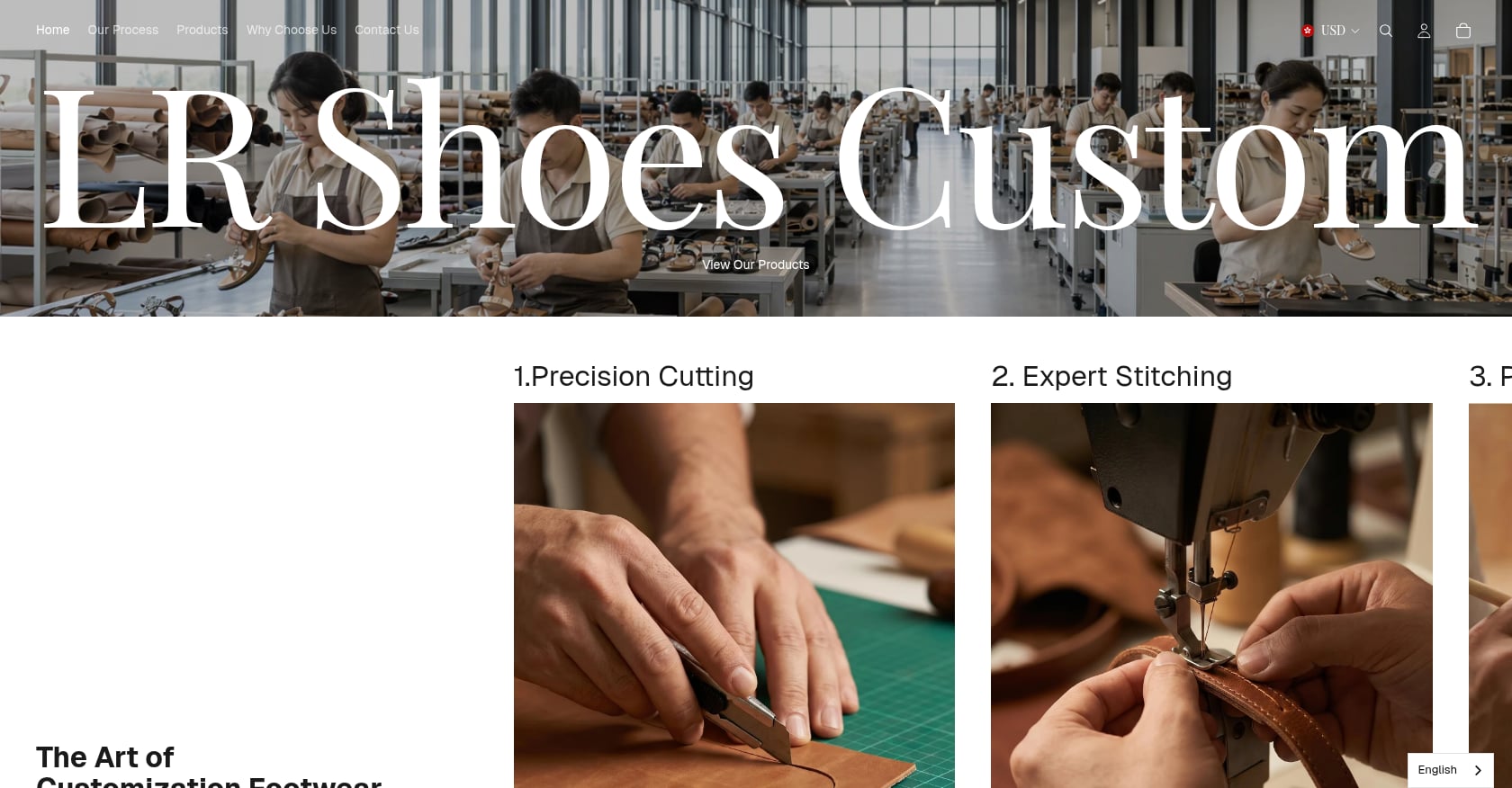
Best for: Brands with original designs, technical specs, and enough volume to justify development costs.
OEM manufacturing is the answer when you have a specific vision for your product and need a factory to execute it. You bring the blueprints; they bring the production infrastructure.
The typical OEM workflow:
- Design submission. You provide tech packs with detailed specifications: materials, colorways, hardware, sole construction, sizing, and branding placement.
- Factory feasibility review. The factory assesses whether they can produce your design with their equipment and material sourcing capabilities. This is where you learn whether your vision is manufacturable at your target price.
- Sample development. The factory produces initial samples (usually single-foot). Expect 2 to 4 rounds of sampling before both sides are satisfied.
- Pre-production sample approval. A signed physical sample becomes the quality benchmark for the entire production run. This step is non-negotiable. Practitioners on Reddit’s r/smallbusiness consistently report that skipping formal sample approval is the single biggest source of bulk-order quality problems.
- Production. The factory runs your order through its manufacturing process, which at established factories follows a standardized workflow (precision cutting, stitching, assembly, lasting, finishing, and packing).
- QC and shipping. Inspection, documentation, and export.
Key considerations for OEM:
- Design ownership stays with you, but get this in writing. IP protection varies by jurisdiction.
- Development time adds 4 to 8 weeks before production even starts.
- Material sourcing can cause delays if you specify components the factory doesn’t regularly stock.
How ODM and Private-Label Programs Work
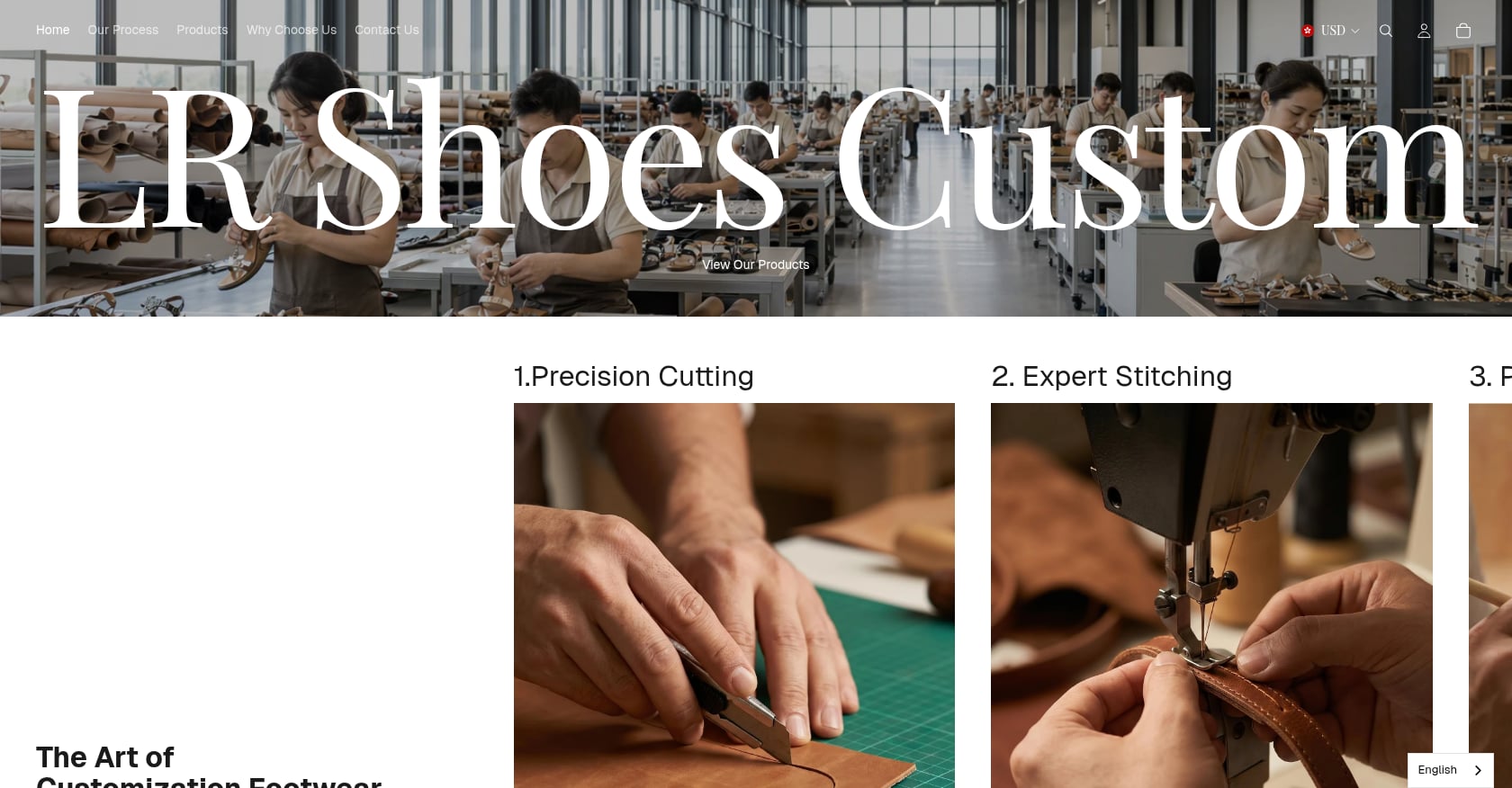
Best for: Entrepreneurs launching their first line, boutique retailers adding house-brand footwear, and e-commerce sellers who want differentiated product without the cost of ground-up design.
ODM is how most new footwear brands get started, and for good reason. The factory has already done the expensive work of developing constructions, testing materials, and refining fit. You build on that foundation.
What ODM customization typically includes:
- Material changes (swap PU for genuine leather, change lining fabrics)
- Color and finish options across all components
- Hardware modifications (buckles, rivets, eyelets)
- Logo and branding placement (insole printing, embossed heel counters, custom hang tags)
- Packaging customization (boxes, dust bags, tissue paper)
- Minor design modifications (strap width, heel height adjustments)
Private label is even simpler. You pick from the factory’s existing catalog, add your logo, and go. The tradeoff is less differentiation, but the speed-to-market and lower development cost make it viable for brands testing a new category.
Women’s footwear is particularly well-suited to ODM because trend cycles are fast. Categories like women’s sandals, Mary Jane flats, and wedges and heels benefit from factories that refresh their catalogs with 20 to 30 new styles weekly, tracking US and EU trends so your product line stays current without requiring an in-house design team.
Explore the latest styles from factory catalogs to see what’s available for ODM adaptation.
Print-on-Demand: A Low-Risk Entry Point
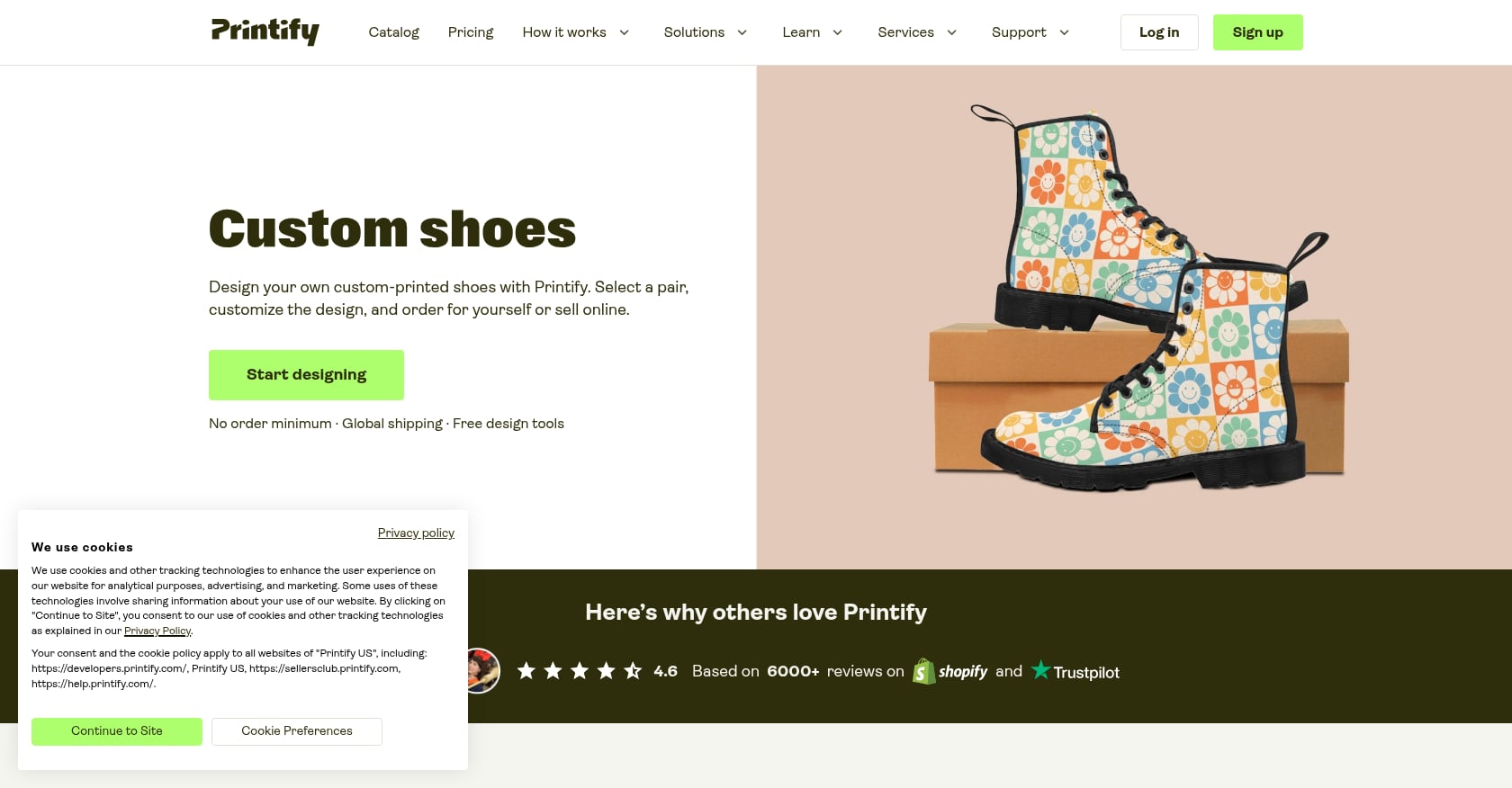
Best for: E-commerce sellers testing a footwear concept before committing to factory production.
Platforms like Printify let you upload artwork onto blank shoe templates. The shoes are produced only after a customer orders, then shipped directly. Base costs run $9.38 to $40.63 per pair.
This path has real limitations for serious brand builders. You’re restricted to canvas sneakers and basic slippers. No leather, no sandals, no heels. Zero structural customization. Quality varies between print providers. Margins are thin.
But it serves one strategic purpose well: market validation. If a design sells consistently through print-on-demand, you have data to justify a factory order with real MOQ commitment. Think of it as a prototype channel, not a long-term production model.
Factory Evaluation: What to Look for in a Custom Shoe Manufacturer
Choosing the right factory is the decision that determines whether your custom shoe business succeeds or fails. Here’s what to evaluate:
Production capability and specialization. A factory that excels at women’s sandals may not be the right partner for athletic shoes. Specialization matters because tooling, materials expertise, and workforce skills are category-specific. Ask what percentage of their production falls in your target category.
QC processes. The gold standard is three-stage quality control: raw material inspection before production starts, mid-production checks with photos and video sent to you, and a pre-loading inspection report before the container ships. Factories that offer this level of transparency are telling you they stand behind their work. Factories that resist sharing mid-production updates are worth questioning.
Certifications and audit history. For exports to Western markets, ask about BSCI audits, ISO certifications, and compliance with destination-country regulations. A factory that understands US care label requirements and EU REACH materials rules will save you significant headaches at customs.
Communication responsiveness. Time-zone differences between you and a Guangdong-based factory are manageable if the factory has dedicated export staff who respond within 24 hours. Test this during the inquiry phase. If pre-sale communication is slow, post-sale support will be worse.
Client references and production history. Established factories serving US, European, and South African markets have track records you can verify. Ask for references. Check import records through public customs databases if available.
Capacity and lead-time commitments. A factory promising 35 to 50 day lead times even during peak season is making a meaningful commitment. Ask what happens if they miss the deadline. Get the answer in writing.
MOQs, Pricing, and What Drives Custom Shoe Costs
Understanding cost structure is essential for margin planning and factory negotiation.
MOQ (Minimum Order Quantity): Industry-wide, footwear minimums typically run 400 to 1,000 pairs per style and color, according to Wonnda. Some women’s sandal specialists set standard MOQs around 600 pairs per color with flexibility for trial orders. One user on r/manufacturing put it plainly: “You should look for white label products. Custom branded items often come with a minimum order quantity that’s usually much higher than 20ct.”
For first-time buyers, the MOQ is often the biggest barrier. Look for factories that explicitly offer trial-order programs with relaxed minimums. The per-unit cost will be higher on a small run, but the reduced risk is worth it when you’re validating product-market fit.
FOB pricing breakdown:
| Cost Driver | Impact on FOB Price |
|---|---|
| Upper material (PU vs. genuine leather vs. exotic) | $1–$5 swing per pair |
| Sole construction (cemented vs. stitched vs. welted) | $0.50–$3 swing per pair |
| Hardware and embellishments | $0.25–$2 per pair |
| Customization depth (standard catalog vs. full OEM) | $1–$3 per pair |
| Order volume (300 pairs vs. 1,000+ pairs) | $1–$3 per pair |
For concrete reference, FOB costs for PU and fabric women’s sandals from Guangdong-based factories range $2 to $6 per pair. A style like beaded cork Birken sandals with embellishments costs more than a plain version of the same construction because of added material and labor.
Regional pricing context. Chinese manufacturing hubs like Guangdong (strong for women’s sandals and fashion shoes) offer the best price-to-quality ratio for volume production. Italian and Spanish factories command premium pricing but carry prestige value that supports higher retail price points. The right choice depends on your brand positioning and target retail price.
The volume math: Even at $3 per pair with a 600-pair MOQ, your initial investment in a single style and color is $1,800 before shipping. A $3 FOB sandal sold at $30 retail delivers strong margins, but only if quality and branding support the price point. Plan your first order conservatively, prove the sell-through, then scale.
Sample Policies: How to Test Before Committing to Bulk
Sampling is where many first-time brand builders get stuck. Practitioners on Reddit’s r/smallbusiness consistently cite the difficulty of finding factories willing to send affordable samples before committing to large orders as their core pain point.
What good sample policies look like:
- Up to 10 single-foot trial samples for regular catalog styles, free of charge (freight collect, roughly 7-day dispatch)
- Custom or exclusive samples priced at $100 to $300, fully deductible against your bulk order
- Clear communication about what’s included: materials, construction, and finishing should match what you’ll get at production scale
Sample evaluation checklist:
- Materials. Do they match the spec sheet? Full-grain leather should look and feel different from corrected grain.
- Construction. Check stitch lines for even spacing. The shoe should flex at the ball of the foot, not mid-arch.
- Sizing. Compare against your target market’s size standards. Chinese sizing doesn’t always align with US or EU charts without adjustment.
- Finishing. Look at edges, glue lines, and hardware attachment. These details separate a $3 shoe from a $6 shoe at the consumer level.
- Branding execution. If you requested logo placement, evaluate print clarity, embossing depth, and placement accuracy.
The most important principle: never approve mass production without signing off on a physical sample. This signed sample becomes the binding quality benchmark for the entire run.
Request free samples to evaluate factory quality before placing a bulk order.
Quality Control: Preventing Sample-to-Bulk Mismatches
Sample-to-bulk inconsistency is the number-one complaint among footwear brand owners sourcing from overseas factories. The sample looks perfect. The bulk order arrives with different leather texture, loose stitching, or hardware that doesn’t match. This problem is preventable with the right QC framework.
Three-stage QC process (what to demand from your factory):
-
Raw material inspection. Before production begins, the factory inspects incoming materials against your approved specifications. You should receive confirmation that materials match the sample standard before cutting starts.
-
Mid-production QC. During assembly, the factory sends photos and video of work in progress. This checkpoint catches problems early, when they can be corrected without scrapping finished inventory. Factories that proactively share mid-production updates are demonstrating accountability.
-
Pre-loading inspection. Before your goods ship, a final inspection covers workmanship, sizing accuracy, packaging, and labeling compliance. The factory should provide a written inspection report with photos.
Beyond factory QC: For orders above a certain value threshold, consider hiring a third-party inspection service (SGS, Bureau Veritas, or independent agents) to verify quality at the factory before shipping. The cost ($200 to $400 per inspection) is negligible compared to receiving a defective shipment.
Anomaly response matters. Ask your factory what happens when QC catches a problem. Good factories commit to a 24-hour response window with corrective action. Factories that go silent when problems arise are ones you should stop working with.
Export Compliance: US and EU Requirements
This is the area where most competitor guides for custom shoe manufacturing fall silent, and it’s where shipments actually get detained.
US requirements:
- Care labels with fiber content, country of origin, and manufacturer identification
- Proper HTS classification for duties
- California Proposition 65 compliance if selling in California
- CPSIA compliance for children’s footwear
EU requirements:
- REACH regulation compliance for chemicals in materials (particularly adhesives, dyes, and tanning agents)
- CE marking where applicable
- Correct customs classification under the Combined Nomenclature
What your factory should provide:
- Complete commercial invoices with accurate descriptions
- Packing lists matching invoice quantities
- Material test reports (especially for restricted substances)
- Certificates of origin
- Care label templates that meet destination-country standards
Factories experienced in exporting to Western markets handle this documentation routinely. Those that don’t will leave you scrambling at the port. BSCI-audited factories carry an additional layer of social compliance verification that some retailers (particularly European chains) require from their suppliers.
Women’s Sandals and Flats: The Fastest-Growing Custom Shoe Segment
Most content about custom made shoes fixates on sneakers and men’s dress shoes. The data tells a different story. According to Persistence Market Research, the women’s segment is the fastest-growing in custom footwear, driven by demand for shoes combining comfort, style, and better anatomical fit.
For brand builders, this creates a specific opening. Women’s sandals, flats, wedges, and heels turn over faster than most footwear categories because they’re trend-driven and seasonal. A factory that releases 20 to 30 new styles weekly, tracking US and EU runway and street trends, gives you a continuous pipeline of fresh product without maintaining an in-house design team.
Categories with strong private-label potential right now include cork sandals (Birkenstock-adjacent styles with custom branding), espadrille flats, Mary Jane flats, and block-heel sandals. These constructions are well-understood by specialized factories, which means reliable quality and competitive pricing.
The category also benefits from favorable economics. Women’s sandals and flats use less material than boots or athletic shoes, so FOB costs are lower. The retail price points ($25 to $80 for most private-label brands) support healthy margins even at moderate volume.
How to Launch a Custom Shoe Brand: A Step-by-Step Path
Step 1: Define your niche and target customer. “Women’s shoes” is too broad. “Minimalist cork sandals for eco-conscious millennial women” gives you a product direction, a customer profile, and a marketing angle.
Step 2: Research factories and request catalogs. Look for factories specializing in your target category. Evaluate their existing styles, material capabilities, and stated MOQs.
Step 3: Order samples. Request 5 to 10 catalog samples to evaluate construction quality, material feel, and finishing. Compare across 2 to 3 factories if possible.
Step 4: Select your initial styles and customize. Choose 2 to 4 styles for your launch collection. Specify your materials, colors, hardware, and branding. Keep the initial assortment tight to concentrate your MOQ investment.
Step 5: Approve pre-production samples. Review and physically sign off on final samples. These become the quality benchmark for your bulk order.
Step 6: Place your first order. Start with minimum quantities. A trial order of 300 to 600 pairs across 2 to 3 styles tests the market without excessive inventory risk.
Step 7: Plan for compliance and logistics. Confirm your factory will supply proper export documentation, care labels, and material certifications for your destination market.
Step 8: Monitor production. Stay engaged during the 35 to 50 day production window. Request mid-production QC updates. Address issues immediately.
Step 9: Receive, inspect, and sell. Conduct your own inspection upon arrival. Launch with strong product photography and clear brand positioning.
Step 10: Reorder and expand. Use sell-through data to inform your next order. Add new styles, increase quantities on winners, and drop underperformers.
Get started with a sample request to explore private-label manufacturing for your brand.
Frequently Asked Questions
How much do custom made shoes cost for a brand owner?
For OEM/ODM factory production, FOB costs range from $1.50 to $15 per pair depending on materials, construction, and order volume. Women’s PU sandals from Guangdong factories typically fall in the $2 to $6 range. Genuine leather, complex hardware, and elaborate constructions push costs higher. Add freight, duties, and fulfillment costs to calculate your landed cost.
What’s the minimum order for custom made shoes?
Industry standard runs 400 to 1,000 pairs per style and color. Some factories specializing in women’s sandals offer MOQs around 600 pairs with flexibility for trial orders at lower volumes. Print-on-demand platforms have no minimum but only cover basic canvas sneakers. For serious private-label programs, plan for at least 300 pairs per style as a realistic starting point.
How long does it take to get custom shoes manufactured?
Production typically runs 35 to 50 days after order confirmation. Add 2 to 8 weeks for sample development before that. Total timeline from first factory contact to goods-in-hand usually spans 3 to 5 months, including sampling, revisions, production, and shipping. Factories that commit to fixed lead times even during peak season provide the reliability needed for retail calendar planning.
What’s the difference between OEM, ODM, and private label?
OEM means you provide the design and the factory produces it. You own the design IP. ODM means the factory offers existing designs that you adapt with your own materials, colors, and branding. Private label is the simplest version: you select from the factory’s catalog and add your logo. Most new brands start with ODM and move toward OEM as they develop design capabilities and market knowledge.
How do I verify a factory’s quality before committing to a large order?
Request samples first. Evaluate construction, materials, and finishing against your standards. Ask about their QC process (three-stage inspection is the benchmark). Request references from existing clients. If possible, visit the factory or hire a third-party inspector. Look for BSCI audit status and ask about their experience with US/EU compliance documentation.
What export compliance documents should my factory provide?
At minimum: commercial invoices, packing lists, certificates of origin, and material test reports. For US imports, you need proper care labels with fiber content and country of origin. For EU imports, REACH compliance documentation is essential. Factories experienced in Western market exports handle this routinely. Those that don’t should raise a red flag.
Can I get custom made shoes in women’s sandals and flats specifically?
Yes, and this is actually the fastest-growing segment in the custom shoe market. Specialized factories offer extensive ODM options in sandals, flats, wedges, and heels. The category benefits from lower material costs, strong consumer demand, and favorable margins for private-label brands. Factories with weekly style refreshes give you access to trend-current designs without in-house design overhead.
What should I look for in a sample policy?
The best factories offer free trial samples for catalog styles (typically up to 10 singles, freight collect). Custom or exclusive samples usually cost $100 to $300, fully deductible against your bulk order. Require that sample materials and construction match what you’ll receive at production scale. Never approve mass production without a signed physical sample serving as the binding quality benchmark.
How do I manage communication with an overseas factory?
Set expectations early. Confirm your factory has dedicated export staff who can communicate in English via WhatsApp, WeChat, or email. Test response times during the inquiry phase. A 24-hour response window is reasonable across time zones. Document everything in writing. Use photos and video to supplement written specifications, especially for material colors and hardware details.
Is it realistic to start a shoe brand with no industry experience?
Yes, if you start with the right manufacturing model. ODM or private label lets you build on proven factory designs rather than engineering shoes from scratch. Focus your energy on brand building, customer acquisition, and market validation. The factory handles the production expertise. Start with a small trial order, learn from the process, and scale based on what sells.
Get started with a sample request to explore private-label manufacturing for your brand.
0 comments