
TL;DR
Finding the right OEM for shoes comes down to matching your product category, budget, and order size to the right factory. This guide compares 8 manufacturers across women’s sandals, sneakers, leather dress shoes, and luxury footwear. Expect FOB prices from $2 to $50+ per pair depending on construction, MOQs from 1 pair (luxury Italian) to 600+ pairs (standard production), and lead times of 35 to 150 days. If you’re sourcing women’s sandals or flats for a private-label brand, LR Shoes Custom offers the strongest combination of pricing ($2 to $6 per pair for core styles), fixed lead times, and structured QC. Read on for the full breakdown.
What “OEM for Shoes” Actually Means
An OEM (Original Equipment Manufacturer) in footwear creates shoes according to your designs, materials, and branding specifications. You own the design. The factory builds it. This is different from two closely related models:
ODM (Original Design Manufacturer): The factory designs the shoe. You pick from their catalog, request modifications, and apply your branding. ODM contracts now represent 50 to 60% of new B2B partnerships, largely because they’re faster and cheaper to launch.
Private Label: This describes the commercial arrangement, not the design process. A private-label shoe is sold under your brand name regardless of whether the factory designed it (ODM) or you did (OEM).
The cost difference matters. OEM projects require upfront investment in custom sole molds ($800 to $3,000 per size group), heel molds ($300 to $1,500), custom lasts ($300 to $800), and multiple sampling rounds ($100 to $350 per sample pair). Before a single production pair ships, an OEM project can require $2,000 to $10,000 in development per style. ODM skips most of that.
The global footwear OEM and ODM market hit $486.3 billion in 2025 and is projected to reach $710.5 billion by 2033 at a 4.85% CAGR. The DTC boom is a major driver: brands design unique styles, have them manufactured overseas, and sell directly online, cutting out intermediaries and increasing margins.
This guide covers 8 OEM shoe manufacturers across different categories, price points, and geographies, with real pricing data, MOQ benchmarks, and the tradeoffs most supplier pages won’t tell you about.
Looking to source women’s sandals, flats, or heels? Browse current sample styles to evaluate constructions before requesting a quote.
At-a-Glance Comparison Table
| Manufacturer | Best For | Location | MOQ | Price Range (FOB) | Lead Time | Key Differentiator |
|---|---|---|---|---|---|---|
| LR Shoes Custom | Women’s sandals, flats, wedges, heels | Shantou, China | 600 pairs/style | $2–$6 (core sandals); $1.50–$15 full range | 35–50 days (fixed) | 3-stage QC, US/EU compliance prep, 80K pairs/day capacity |
| XINZIRAIN | Women’s fashion development partnerships | China | Not published | Quote-based | Not published | 25+ years, development-oriented approach |
| HYD Shoes | Mixed categories, startup-friendly | China | Very flexible | Factory-direct | Not published | One-stop mixed orders accepted |
| Best Shoe Factory | Ultra-low MOQ testing | China | 10 pairs (claimed) | Not published | Not published | Lowest advertised MOQ |
| Mychonly | Custom low-MOQ shoes, outdoor/sport | China | 200–600 pairs | Not published | Not published | Full mold-to-ship service |
| Foot On Shoes | Premium leather women’s footwear | Agra, India | Not published | Premium ($31+) | ~2 weeks (sample) | SA8000, SEDEX, 40+ years, no subcontracting |
| Italian Shoe Factory | No-MOQ luxury positioning | Italy | 1 pair | Premium ($31+) | Not published | Zero minimum order |
| SandalsManufacturers.com | Custom sandals, private label | China | Not published | Not published | Not published | Sandal-specific focus |
Detailed Manufacturer Profiles
1. LR Shoes Custom
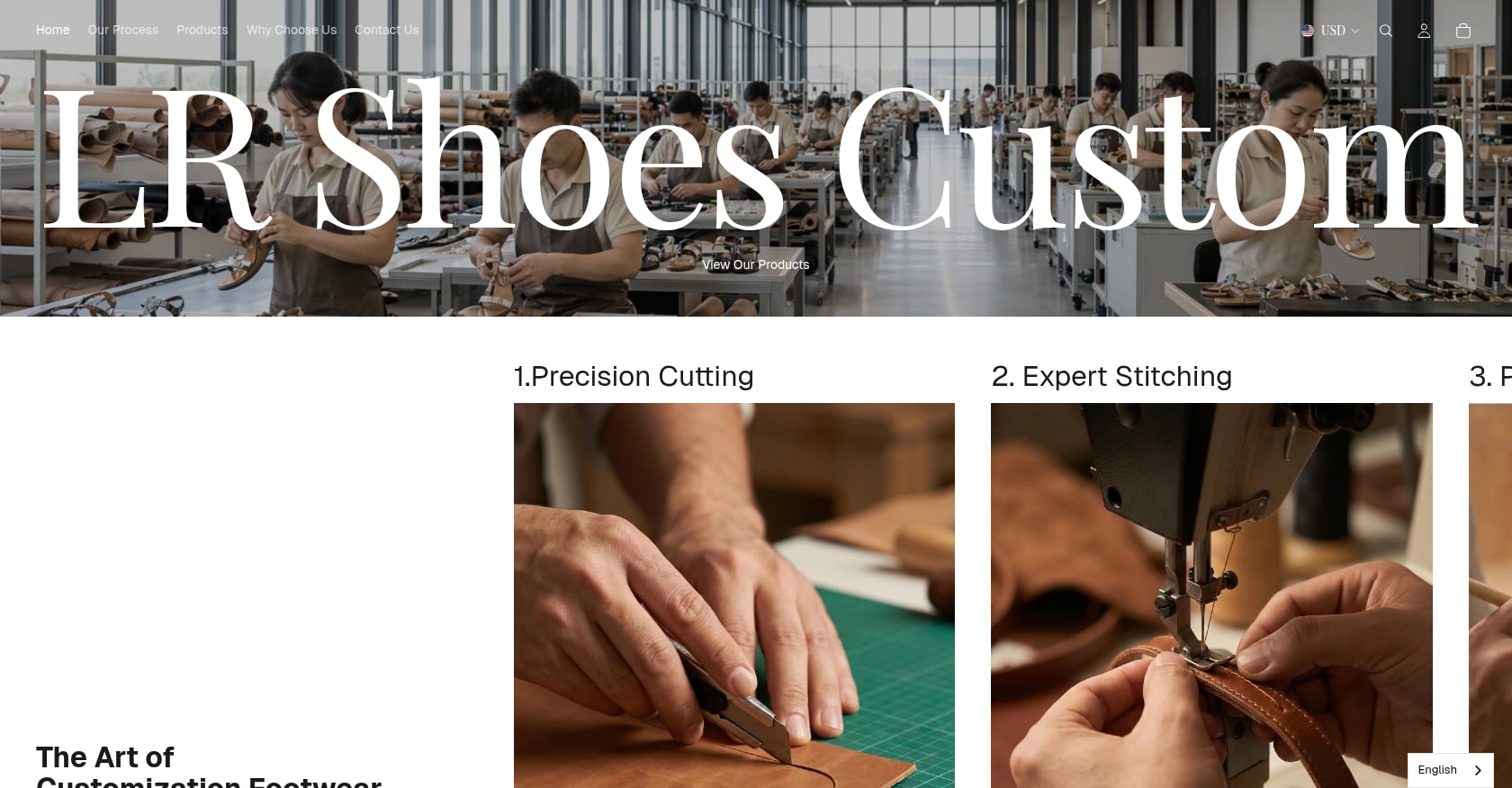
Best for: Women’s sandals, flats, wedges, and heels, especially private-label brands targeting US and EU markets.
LR Shoes Custom is a Shantou, Guangdong-based OEM/ODM supplier with 17 years of export experience. The company coordinates production across 20 cooperative factories with an aggregate capacity of 80,000 pairs per day, which gives it the ability to handle both trial runs and large-scale orders. A benchmark example: a single-style order of 150,000 pairs for a Spanish buyer, and a current-year US pearl sandal run of 80,000 pairs.
Pricing and MOQs:
- Core PU/fabric sandals: $2 to $6 per pair
- Full range (boots, plush slippers, heeled sandals, flat sandals, injection-molded sandals): $1.50 to $15 per pair
- Within the same sandal style, material and workmanship variations create a $1.00 to $3.00 per pair differential
- Standard MOQ: 600 pairs per style (single color), 800 pairs for 1 to 3 colors per style
- Trial orders below standard thresholds are negotiable
Sample Policy:
- Up to 10 single-foot samples free for regular styles (freight collect, 7-day dispatch)
- Complex or exclusive samples: $100 to $300, fully deductible against bulk orders
- Physical signed counter-sample required before mass production
QC and Compliance:
- Three-stage tracking: raw material inspection, mid-production photos and video, pre-loading inspection reports
- States it operates a BSCI-audited production network
- Export compliance preparation including US care labels, EU materials rules, and complete invoicing/certificates per shipment
- Fixed 35 to 50 day lead time, including during peak season
Key Strengths:
- 20 to 30 new trend-driven styles added weekly, keeping the catalog fresh for seasonal buying. Check their latest new arrivals for current options.
- Category depth in women’s footwear: sandals, wedges and block heels, Mary Jane flats and espadrilles, and cork double-buckle sandals
- Six-step manufacturing workflow (cutting, stitching, gluing, lasting, finishing, packing) documented end-to-end for buyer audits
Tradeoffs:
- 600-pair standard MOQ is higher than ultra-low-MOQ competitors advertising 30 to 90 pairs, though buyers gain stronger compliance framing and QC structure in return
- Narrower category focus: women’s and girls’ footwear only, no men’s or athletic shoes
- No published FOB price lists; quotes required for program pricing
For a deeper look at navigating US and EU compliance requirements, their guide on footwear compliance rules covers labeling, REACH, and documentation checklists.
2. XINZIRAIN (Herrains.com)
Best for: Women’s fashion brands wanting a development-oriented manufacturing partner for heels, sandals, boots, and handbags.
XINZIRAIN is a China-based women’s shoe manufacturer with more than 25 years of experience in footwear development and export manufacturing. Unlike factories focused only on high-volume production, XINZIRAIN positions itself as a development partner, meaning they invest more in pattern-making, material sourcing, and fit iteration alongside clients.
Key Features:
- Deep development capabilities for complex women’s fashion styles
- Broad product line including handbags alongside footwear
- Long track record in export markets
Tradeoffs:
- Development-heavy focus likely means higher per-unit costs versus pure-volume factories
- MOQ and pricing not publicly listed, requiring direct negotiation
- Broader product range could dilute specialization in any single category like sandals or flats
3. HYD Shoes
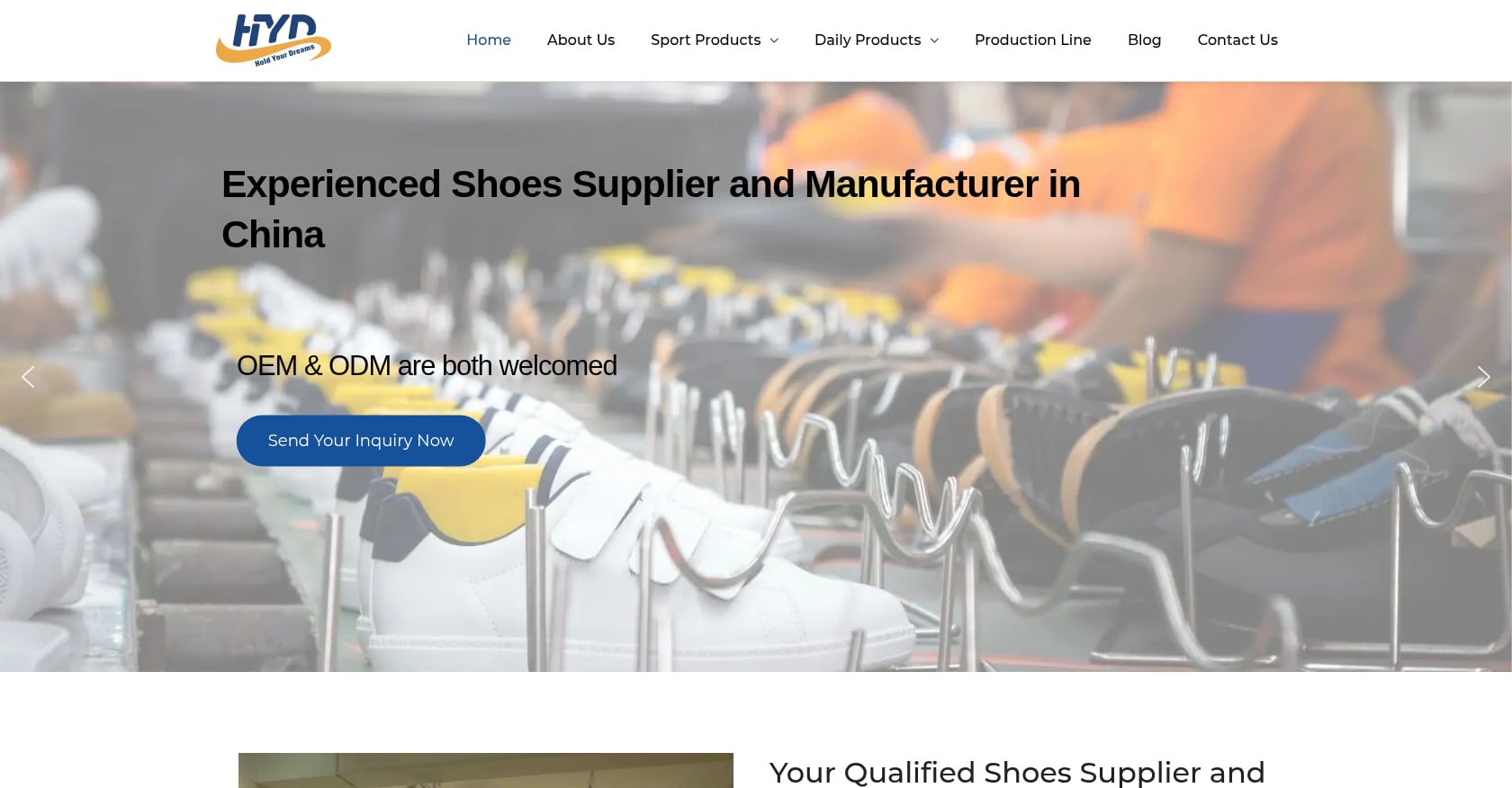
Best for: Mixed-category orders (sneakers, casual, kids, safety shoes) for startups needing flexible sourcing.
HYD Shoes positions itself as a flexible one-stop supplier. It accepts small and mixed orders, making it more accessible for buyers who need sneaker styles alongside casual footwear without committing to large single-category runs.
Key Features:
- Very flexible MOQ policy, accommodating startups and enterprises alike
- Broad category coverage from sneakers to safety shoes
- Factory-direct pricing
Tradeoffs:
- Broad category focus means less specialization in any single footwear type
- Website messaging around “OEM shoes same as original” raises questions about IP clarity that buyers should probe directly
- QC and compliance documentation not prominently detailed on their public-facing materials
4. Best Shoe Factory
Best for: Ultra-low MOQ needs for first-time buyers testing a concept.
Best Shoe Factory markets an aggressive low-MOQ pitch, claiming minimums as low as 10 pairs. This appeals directly to brand founders who want to test market response before committing thousands of dollars.
Key Features:
- Lowest advertised MOQ in this comparison (10 pairs claimed)
- Targets first-time buyers and micro-brands
- China-based production
Tradeoffs:
- Very low MOQs almost always mean higher per-unit costs, sometimes dramatically so
- Compliance and QC documentation not clearly detailed in public materials
- A former Nike product-creation professional noted on WearTesters that “factories with lower MOQ orders tend not to have complicated set up needs,” which means ultra-low-MOQ shops may struggle with complex constructions
- Pricing not published, making cost comparison difficult without inquiry
5. Mychonly (Huangxuan)
Best for: Customized shoes at moderate MOQs, including outdoor and sport sandals.
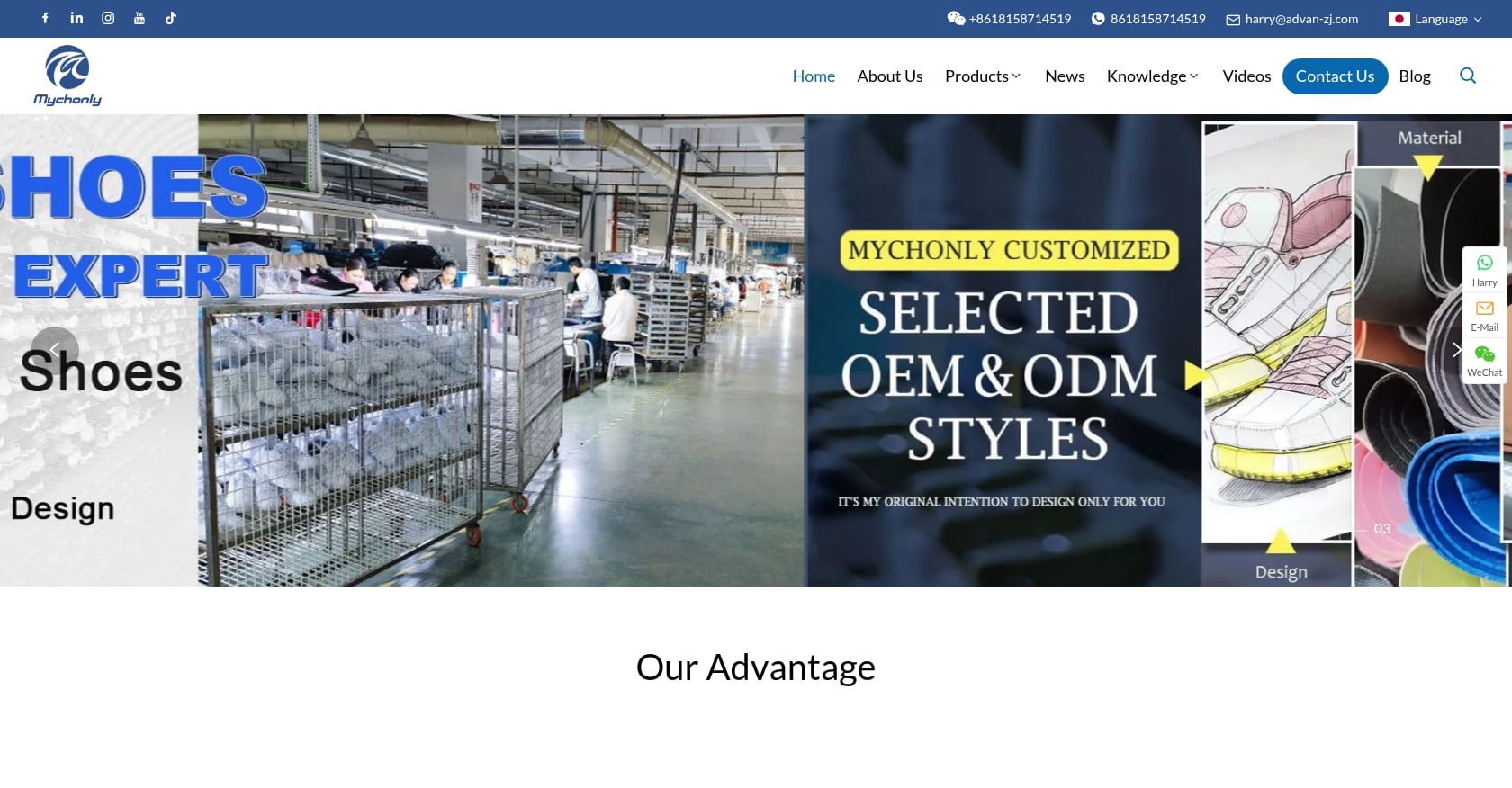
Mychonly offers a full mold-to-ship service with MOQs typically ranging from 200 to 600 pairs. They cover a wider range than pure fashion suppliers, including outdoor and sport-oriented sandal designs.
Key Features:
- Full customization from mold creation through shipping
- MOQ of 200 to 600 pairs hits a middle ground between ultra-low and standard production runs
- Covers both fashion and functional footwear categories
Tradeoffs:
- Less specialized in women’s fashion sandals specifically
- Pricing not published
- Lead time details not prominently available
6. Foot On Shoes (India)
Best for: Premium leather women’s footwear brands with EU/UK compliance requirements.
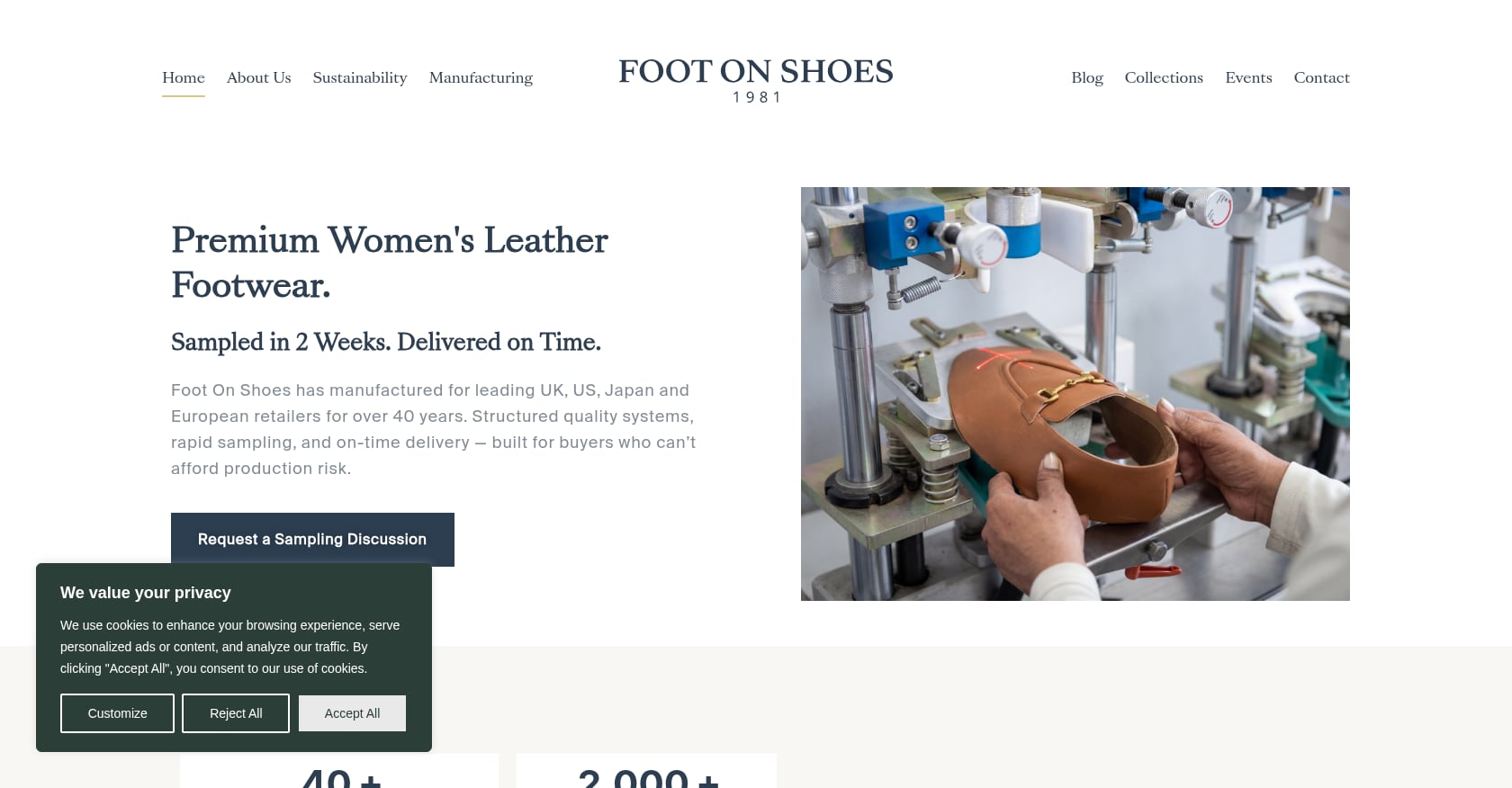
Foot On Shoes is based in Agra, India, and was founded in 1981. They produce up to 2,000 pairs of women’s leather footwear daily for fashion retailers across the UK, EU, USA, and Japan. All production is managed in-house with no subcontracting, which gives buyers more control over quality and labor conditions.
Key Features:
- Certifications: SEDEX (SMETA audited), SA8000, ISO 9001, HIGG, RCS
- 40+ years of operation with in-house design, sampling, production, and export
- Strong EU/UK compliance infrastructure
- Sample turnaround approximately 2 weeks
Tradeoffs:
- India-based logistics chain differs from the dominant China-to-US corridor, potentially adding complexity for North American buyers
- Higher price point ($31+ per pair) puts it firmly in the premium segment
- Leather focus limits options for synthetic, PU, or fabric fashion sandals
- MOQ not publicly listed
India represents a growing alternative to China for OEM shoe production, particularly for leather goods. Practitioners on sourcing forums consistently recommend considering India when leather quality and social compliance certifications are non-negotiable.
7. Italian Shoe Factory
Best for: No-MOQ luxury and premium positioning.
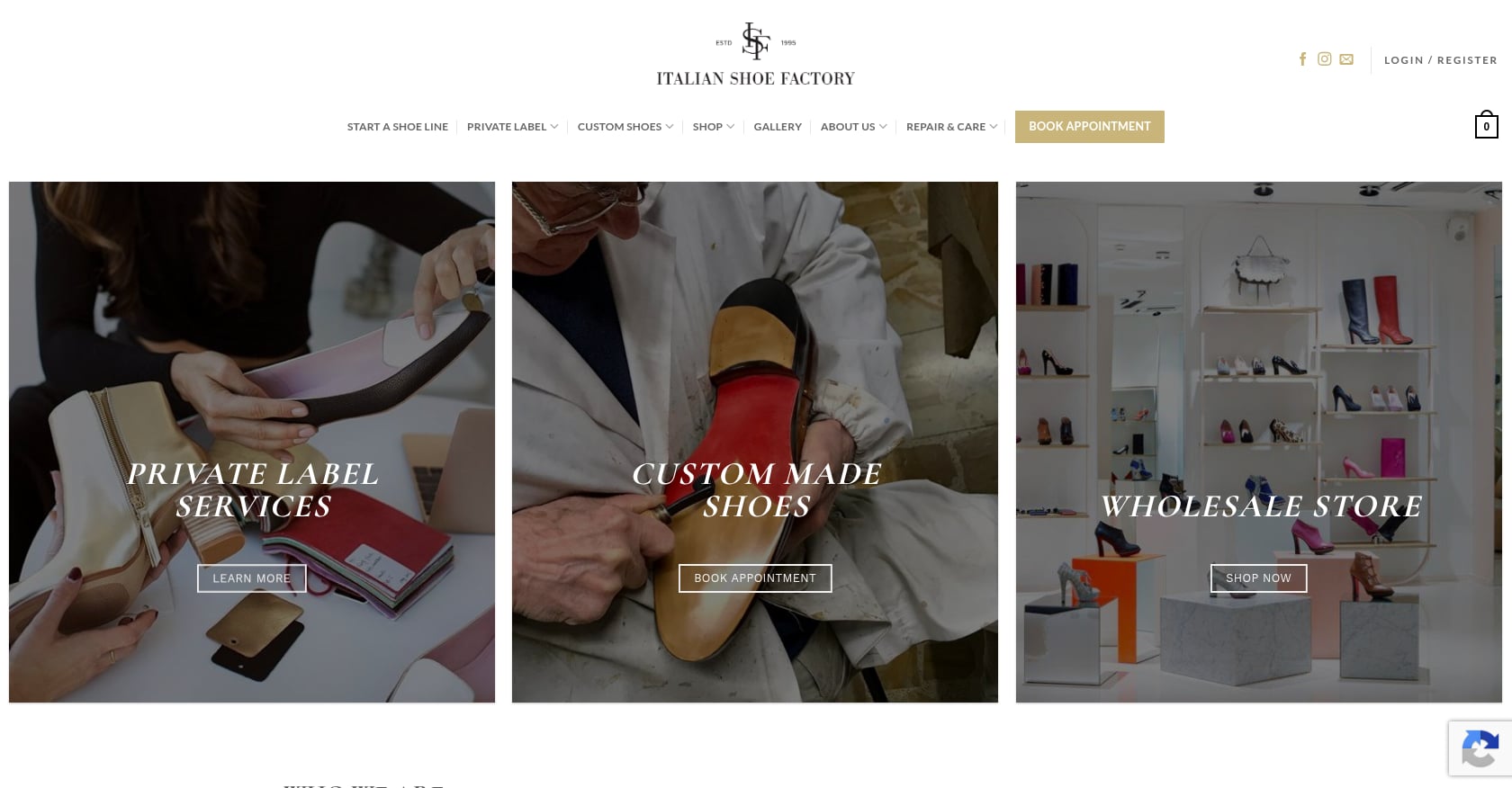
Italian Shoe Factory differentiates itself with a claim that’s rare in footwear manufacturing: no minimum order quantity. For brands positioning in the luxury segment, this eliminates the inventory risk that keeps many small labels from launching.
Key Features:
- Zero MOQ (claims 1-pair minimum)
- Italian manufacturing with associated quality perception
- Premium positioning
Tradeoffs:
- Significantly higher per-unit cost ($31+ per pair), making it unsuitable for mass-market or mid-range brands
- The Italy manufacturing premium adds to landed cost on top of already high FOB prices
- Limited publicly available detail on production categories and compliance
8. SandalsManufacturers.com
Best for: Custom sandals with private-label support from a sandal-specific factory.
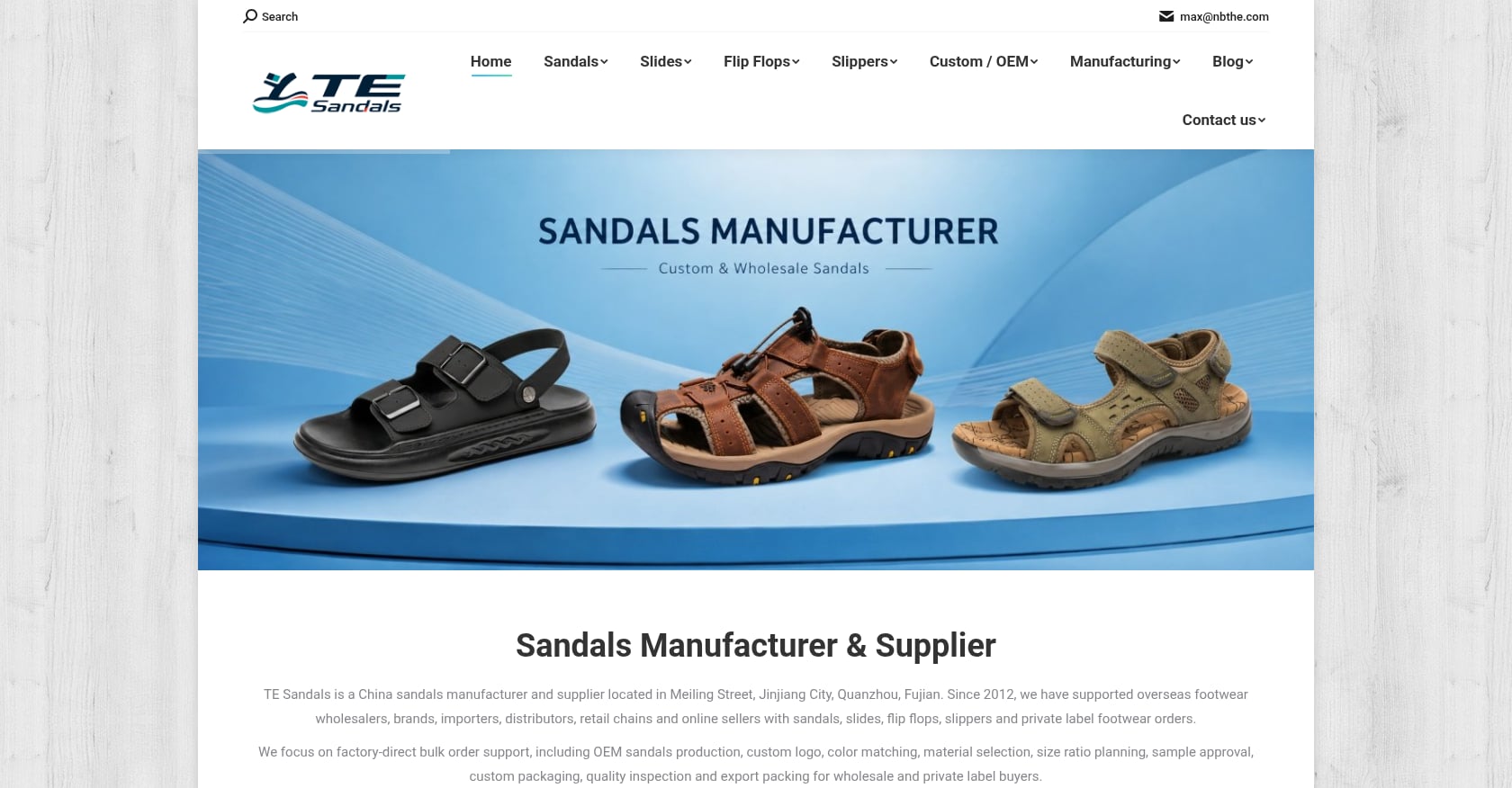
This China-based manufacturer focuses specifically on sandal production with private-label capabilities. The narrow focus means they should understand sandal construction deeply.
Tradeoffs:
- Less documented compliance and QC process in public-facing materials compared to more transparent competitors
- MOQ, pricing, and lead time details require direct inquiry
- Limited public information on certifications or audit status
How to Choose the Right OEM for Shoes
Picking a factory isn’t just about finding the lowest price. Here’s the evaluation framework that separates good partnerships from expensive mistakes.
Category Specialization Comes First
This is the single most important criterion, and the one most first-time buyers underweight. As sourcing platform Wonnda puts it: sneakers, leather dress shoes, sandals, and boots are made by different specialist factories with different constructions and skills. A sneaker factory cannot Goodyear-welt a dress shoe, and a leather shoe maker cannot injection-mold a sneaker. The wrong factory cannot deliver your shoe well regardless of willingness.
Match your product type to a factory that makes that specific type. Period.
Compliance and Certifications
Footwear sold in the EU must meet restricted-substance limits (REACH), leather needs chrome and substance compliance, and safety footwear requires EN standards with CE marking. For the US market, care labels are mandatory, and children’s footwear falls under CPSIA rules. Social compliance certifications like BSCI or SMETA matter to retail buyers and can be deal-breakers for department store programs.
QC Process Transparency
Look for multi-stage inspections: incoming materials, in-line checks, and final pre-shipment audit, preferably using AQL (Acceptable Quality Level) standards. Quality inspection company V-Trust notes that an open seam anywhere on a shoe constitutes a critical defect in baby products or a major defect in other products. Other audit criteria to specify in your tech pack: broken stitches, weak cementing, slanted heels, uneven soles, detached rivets, and peeling surfaces.
Sample-to-Bulk Consistency
Practitioners on Reddit and sourcing forums repeatedly raise this pain point: the sample looks excellent, but bulk production quality becomes inconsistent. The fix is requiring a signed physical counter-sample before mass production. Both parties keep a reference pair, and any deviation from the counter-sample gives you grounds for rejection.
Communication Quality
Many sourcing failures come from poor communication rather than production itself. Test responsiveness during the inquiry and sampling phase. If a factory takes a week to answer basic questions before they have your money, expect worse after.
Red Flags to Walk Away From
- Unwillingness to sign NDAs
- No sample policy or excessive sample fees with no deduction against orders
- Vague answers about material origins or labor practices
- Pressure to pay the full amount upfront (standard is 30% deposit, 70% before shipping)
- No physical factory address or unwillingness to accept a third-party audit
OEM Shoe Pricing: What to Actually Budget
Most articles about OEM shoe manufacturing avoid specific numbers. Here’s what the market actually looks like.
FOB Pricing by Category
| Shoe Type | FOB Price Range | Typical Source Region |
|---|---|---|
| Women’s PU/fabric fashion sandals | $2–$6/pair | China (Shantou/Guangdong) |
| Basic canvas sneakers | $8–$15/pair | China |
| Leather dress shoes | $20–$40/pair | China, India |
| Performance running shoes | $25–$50+/pair | China (Fujian), Vietnam |
| Handcrafted premium/Italian leather | $31+/pair | Portugal, Spain, Italy |
Regional pricing follows a clear pattern. Low-end production ($8 to $15 per pair) comes from China with high MOQs and basic materials. Mid-range ($16 to $30) gets you better materials and moderate customization from Vietnam or Indonesia. Premium ($31+) involves handcrafted details, Italian leathers, and European manufacturing.
Tooling and Setup Costs
Tooling and mold costs range from $500 to $3,000 per style and are typically non-recurring. Some manufacturers absorb this cost for larger contracts. Custom sole molds specifically run $800 to $3,000 per size group, heel molds $300 to $1,500, and custom lasts $300 to $800 per size run.
The Landed Cost Reality Nobody Mentions
Factory price is not your final cost. Landed cost, the total expense upon arrival at your destination warehouse, typically exceeds factory cost by 25% to 40%. This markup includes ocean freight, customs duties, port fees, inland trucking, and clearance costs.
On US import tariffs specifically: the US imposes a 10.5% duty on leather athletic shoes under HTS code 6404.11, while synthetic uppers fall under 6404.20 with an 8.5% rate.
Container Economics
A 20-foot container fits approximately 8,000 pairs of shoes. A 40-foot container holds around 20,000 pairs. LCL (less-than-container load) shipments are available for smaller orders but raise the per-unit shipping cost noticeably. If your total order can fill even half a container, consolidating shipments will save money.
China’s Manufacturing Hubs for OEM Shoes
China produces more than 50% of the world’s footwear, and the industry clusters by specialization:
- Guangdong (Shantou, Dongguan): Women’s fashion shoes, sandals, heels. This is where most fashion-forward women’s footwear OEM production happens.
- Fujian (Quanzhou, Jinjiang): Athletic and sneaker production. Major brands source here.
- Zhejiang (Wenzhou): Leather and dress shoes. Practitioners on Alibaba forums report Wenzhou prices of $5 to $8 EXW depending on materials and sole, with MOQs of 300 pairs for one color per design.
- Shantou: Sandals and slippers, especially injection-molded and fashion sandals.
Knowing which hub matches your category helps you shortlist factories faster and avoid the common mistake of asking a sneaker town to make women’s heels.
How to Get Started: Sample-to-Bulk Workflow
Step 1: Define Your Product Brief
Decide whether you’re going the OEM route (your design from scratch) or ODM route (selecting from a factory’s existing catalog and customizing). ODM is faster and cheaper to launch. OEM gives you full design ownership but costs $2,000 to $10,000 in pre-production development per style.
If you’re considering the ODM path for women’s fashion footwear, browse sample styles to see how catalog selection works in practice. For example, a cork Birken-style sandal base can be customized with your branding, colorway, and material choices.
Step 2: Request and Evaluate Samples from Multiple Factories
As one sourcing veteran put it on Reddit: “Getting samples from multiple manufacturers before committing is gonna save you a ton of headaches down the road.” Order samples from at least 3 factories. Compare construction, material feel, sole flexibility, cementing quality, and finishing details side by side.
Step 3: Sign a Counter-Sample Before Mass Production
Once you approve a sample, both you and the factory should sign off on a physical reference pair. This counter-sample becomes the quality benchmark. Any deviation during bulk production gives you contractual grounds for rejection or rework.
Step 4: Negotiate MOQ and Payment Terms
Standard payment in footwear OEM is 30% deposit with 70% balance due before shipping (against inspection). For first orders, factories rarely offer better terms. After 2 to 3 successful orders, you may negotiate 30/70 with the balance payable against bill of lading.
Step 5: Set QC Checkpoints
Don’t wait until goods arrive at your warehouse to discover problems. Establish at minimum three inspection points: raw material check, mid-production review (photos and video at minimum), and pre-shipment inspection using AQL sampling. Third-party inspection companies like V-Trust or QIMA can run final audits for $200 to $400 per visit.
Step 6: Plan Logistics and Compliance Documentation
Prepare your customs documentation before production finishes. You’ll need commercial invoices, packing lists, bills of lading, certificates of origin, and any required test reports (REACH for EU, CPSIA for US children’s products). Lead times for first production runs typically span 90 to 150 days including mold development and sampling. Repeat orders with existing tooling are much faster at 25 to 50 days.
Ready to start sourcing women’s sandals or flats? Request a quote from LR Shoes Custom to get sample pricing and lead time details for your specific project.
Frequently Asked Questions
What does OEM mean in shoes?
OEM stands for Original Equipment Manufacturer. In footwear, an OEM factory produces shoes according to your designs, material specifications, and branding requirements. You provide the design; they handle manufacturing. The finished product ships under your brand name.
What’s the difference between OEM and ODM shoes?
With OEM, you supply the design and the factory builds it. With ODM, the factory designs the shoe and you select from their catalog, applying your own branding. ODM is faster and cheaper to launch because it skips custom pattern-making and mold development. Private label can sit on top of either model.
How much do OEM shoes cost?
FOB factory prices range from $2 to $6 per pair for PU/fabric fashion sandals, $8 to $15 for basic canvas sneakers, $20 to $40 for leather dress shoes, and $25 to $50+ for performance running shoes. Add 25% to 40% above factory price for landed cost (shipping, duties, clearance). OEM projects also require $2,000 to $10,000 in upfront development costs per style for molds, lasts, and sampling.
What’s the typical MOQ for OEM shoes?
It depends on factory size and type. Large factories require 1,000 to 30,000+ pairs. Mid-size OEM factories typically ask for 500 to 1,000 pairs per style. Women’s sandal specialists like LR Shoes Custom set standard MOQs at 600 pairs per style in a single color, with trial orders negotiable. Ultra-low-MOQ specialists go as low as 10 to 300 pairs but charge significantly more per unit.
How long does OEM shoe production take?
First production runs with new tooling take 90 to 150 days including mold creation and fit sampling. Repeat orders with existing tooling run 25 to 50 days. Some factories commit to fixed timelines; LR Shoes Custom, for instance, guarantees 35 to 50 day delivery even during peak season.
Are OEM shoes the same quality as brand-name originals?
Quality depends entirely on the factory, materials specified, and QC processes in place. Many major brands use OEM factories, so the manufacturing capability exists. The difference comes down to material grade, quality control rigor, and how closely bulk production matches the approved sample. Always require a signed counter-sample and multi-stage inspections.
Should I source OEM shoes from China, India, Vietnam, or Europe?
China dominates with over 50% of global production, the broadest factory options, and the most competitive pricing for mid-range footwear. India excels in leather goods with strong social compliance certifications. Vietnam is growing fast in athletic footwear. Portugal, Spain, and Italy serve the premium and luxury segment at $31+ per pair with very low or zero MOQs.
What are the biggest mistakes when choosing an OEM shoe factory?
Picking a factory that doesn’t specialize in your shoe type (a sneaker factory for heels, for example), skipping multi-factory sampling, not requiring a signed counter-sample, and underestimating landed costs by budgeting only for FOB price. Community discussions on Reddit and sourcing forums also warn that many Alibaba listings are trading companies, not actual factories, so always verify manufacturing capability directly.
0 comments